
the iconoclastic rubble
barlow crassmont
IF OBSERVED FROM THE SIDE, at a forty-five degree angle, the abandoned Hafeez residence resembled a cube without an entrance.
Absent of its once-upon-a-time-charm and golden exterior that’s been eroded by the swirly Arabian sand, it was once a mighty symbol of modernism and a proud emblem of the affluent family that laid its foundations. Yet, the last fifteen years had seen it decay into a regretful afterthought of a bygone era. As a structure, it exists today in physical form only, with few of Allah’s true worshippers daring to inhabit its allegedly disgraceful quarters. Midhat Nasser, who owns the Aryama grocery store across the street, said it best.
“Hafeez house is a temporary toilet for the destitute and the needy, nothing more. The owners have turned their backs on it, as has Allah.”
Of windows, the Hafeez residence possessed two square shaped embedments, accentuated by black bars in shape of the plus sign. Visible access points were as removed as comfort in midday summer sun. If one walked around the back, they’d locate a shoddy, nearly dilapidated door. Torn in several places, with multiple holes like shadowy dents of a crumbling block of cheese. The loose, decaying knob required several jiggles in order to open, and regularly fell and collapsed on the dusty floor with an unremarkable thud, its consequent insertion back into the door a near impossibility. Most passing drifters, after realizing the crippled door did little in protecting them from the cold, gave up and moved on to more insulated ruins. But the stubborn, old fashioned va-grants would attempt to pray the restless chilliness away, hoping the Almighty would keep their bones from freezing during winter slumber.
Whether or not their invocations were honored, or were yet to be, is a subject of debate in the Yarmouk district.
A common element of agreement is the origin of Haffeez residence’s transformation, from a respectable home of a cherished family, into a domicile synonymous with all things ungodly. In the mid 2000s, the owners rented out two of its three floors to a group of foreigners, a faithless half-dozen individuals descending from the European west and the North American landmass, both notorious for their unabashed debauchery. The new tenants carried little respect for the Muslim culture, often engaging in activities antithetical to the Arab faith. Alcohol and pork were frequently consumed within their walls, loud music played late into the night on weekends, and indulgence in sex and drugs was commonplace.
Disgusted by the moral blemish associated with the house that was so synonymous with his family’s proud lineage, Adnan Haziz waited until the foreigners’ lease was up, and kindly asked them to relocate elsewhere. Then, he took all the furniture out, removed all the fixtures from the floors, walls and ceilings, and locked its doors forevermore. The dust that collected within thereafter would no longer concern him or his, and the financial loss, as detrimental as it may have been, was still preferable to the disgrace associated with the structure.
“Satan has returned,” the neighbors would comment over tea. “He stays at the Hafeez place. Inshallah, his visit there is a temporary one.”
Such beliefs, at first possessed by the few, eventually spread to the masses faster than flu in winter. Before long, the Hafeez place was a last resort only for the desperate and needy, and hardly for a true follower of Islam.
Nevertheless, the annual Riyadh season would test the true effect of the cursed residence on the desperate dweller, faithful or not. From October to February, citizens from across the Arabian peninsula swarmed the light shows, street festivals and entertainment venues across Saudi Arabia’s capital. As Riyadh Boulevard, Al-Murabaa, Winter Wonderland and Riyadh Front hosted more people than the year prior, the local hotels, motels and inns would fill up quicker than water on a sinking ship. Prices for rooms and temporary apartments were hiked, in most cases limited to families only. The lone traveler could hardly afford the unreasonable cost of lodging, and on the off chance they could, would be refused a room on grounds of being a solitary guest.
When Arsalan Ghazali, in his quest to attend Riyadh’s festival, crossed the curvy desert dunes in the fall of 2022, he was low on money but high on the eternal love of the Creator. His brownish face, gently toasted for decades by the harsh Arabian sun, was accentuated by a wide forehead and a salt-and-pepper beard that ran in a U-pattern from ear to ear, with a clean shaven upper lip. Having grown up in the rural tents of the Maalouf tribe, located in the vast Jubbah desert, he was excited to visit a large city for the first time. With a sack of clothes on his back, a pouch of dry snacks and several bottles of water under his arm, Arsalan got off the bus in the populated capital city, not yet aware of the unexpected brand the journey would have on his soul.
The trek from one crowded event to another across the gridlocked city left Arsalan weary. His funds were depleted faster than sand from a shattered hourglass, in large part due to the multiple taxis he had no choice but to take. By the time midnight was in his rearview mirror, the search for a modestly priced accommodation was well underway. But the obstacles he faced upon inquiry were one of two: available lodging was more than he could afford, or could not be leased to lone tenants. After the sixth attempt had turned fruitless, and Arsalan’s desperation became so dire it was visible on his fatigued face, he was approached by an opportunist outside of The Boulevard Tree hotel. The man’s outfit was grimy, stained in several places, and his feet, visible through open-toed sandals, appeared to have not been washed in days.
“Looking for a room?” His cigarette emitted an aroma that Arsalan associated with cheap tobacco. The man looked to be either Indian, Bangladeshi or Pakistani; Arsalan could not tell exactly which.
“I don’t have much money.” Arsalan was too drained to even ask what hole in the wall the man had in mind.
“It will cost you twenty riyals, and that includes the ride there. You pay up front.” Arsalan nodded, the man pointed to the derelict vehicle located just behind him, and within seconds, they were off, a cloud of dust hovering in their wake like an exhaust discharge gone haywire.
It took them less than thirty minutes to arrive in front of the Hafeez residence, during which Arsalan was in and out of sleep, like a child after a taxing playdate. The property was dark, its shape difficult to decipher in the perpetual shadow, and even the bright moon above avoided casting its golden illumination upon it.
“The door is in the back,” the driver said. “It’s unlocked. Stay as long as you want. Sweet dreams.”
Before Arsalan could ask a follow up question, the man drove away, his car soon a tiny flash in the distance, vanishing into the deep night. The area was silent, nearly mystical, and reticent as a shy acquaintance. Arsalan found it strange that in a city of several million vehicles, the engine of not a single one made its way to his isolated location. For the moment, he felt like the loneliest person in the Arabian peninsula.
The backdoor was as the driver had described. In poor shape, but easy to open, and easier to shut than expected. Subtle creaks resonated from the above floor, mimicking frenetic footsteps of nocturnal rodents. Dust rose with each of Arsalan’s steps, the infinitesimal particles perceptible by his lungs rather than his eyes. Barely noticeable, but felt nonetheless, was intermittent fog that formed periodically on the windows, as if by invisible breath. Arsalan, at first, believed to be alone in the house, but decided to check each floor, room and corner anyway, just to confirm the breathing he was sensing wasn’t another’s. Within minutes, his suspicions proved to be fruitless. The place was emptier than the driest patches of the Sahara. And yet, there appeared a force within, all around him, practically next to him, that was beyond anything he could comprehend. Upon closely inspecting the steamy glass, he now became aware of an occasional expansion and subsequent contraction of some of the walls. Their subtle movements reminded him of a pair of relatively healthy lungs, operating at resting capacity.
It’s probably my fatigue, and nothing more. I’ve heard that the exhausted can hear and feel that which isn’t there, so this is likely such a case. Tomorrow I’ll probably chuckle about having such thoughts.
At length, he sensed his way to a corner adjacent to a blocked out window, and laid out a brown garment from his sack on the hard floor. To someone used to sleeping on the soft sands of the Arabian peninsula, Arsalan normally would’ve found the severe firmness of the floor uncomfortable, but in his exhausting state, he fell asleep instantly. Not the murmurs of deceptive spirits that roamed about, nor the whispers of wandering shadows, could disrupt the peaceful slumber that consequently overtook him like a potent dose of anodyne.
Typically, Arsalan’s body clock was wired to wake at the dawn’s first light, and partake in the Fajr prayer, but on this morning, upon hearing the calls from the Mosque, he sighed, turned over, and continued to dream, against his better nature. The sun ultimately made its way through the shattered walls and sprayed the golden rays across his bronzed face, attempting to nudge him into waking, but whether consciously or not, he ignored the light as much as the sound. When at last he did rise, his hair disheveled and untidy, and corners of his eyes filled with rheum, he was driven by a sense of hunger rather than prayer for the first time in his life. He knew not what to make of this newfound lack of desire, and momentarily wondered if he was still asleep. Lifelong memories of faithfully praying five times a day, starting when he was but a boy, flashed like a rapid slide show before his aging eyes. But despite him being subconsciously urged to continue the ritual that’s become so symbolic of a Muslim’s life, he could find no motivation to actually lay down the prayer rug and get on his knees.
I’ve dedicated my life to Allah and the prophet, and yet I’m no better for it. If I do not submit to the Lord as usual, then what? My life will either improve, or stay the same. But at least I won’t partake in such a pointless custom any longer.
At length, he nodded to himself, mumbled a few whispers under his breath, and held his head as high as if he had done Allah the most gracious service.
Toilets having long since been removed from the Hafeez residence, as have all the sinks and inner plumbing, Arsalan had no choice but to relieve himself in corners far from where he had laid down. Previous remains of human waste were still present, resembling piles of oddly colored clumps of dirt and dust. Their deterioration took away any odor they may have once had, and only when Arsalan discharged his own fresh waste was the chamber filled with the objectionable stench so reminiscent of public toilets. He had no tissues in his possession with which to wipe, and accordingly made due without it, never once questioning his decision.
At midday, Arsalan ventured to the Aryama grocery store, counting the few riyals he had left, and wondering not only how many snacks he could buy with them, but how much sustenance they’d provide for him. Midhat Nassar could smell the unpleasant odor emanating through Arsalan’s dust colored thobe, and associated the traveler with a destitute labor worker down on his luck.
“It is almost time for Dhuhr prayer,” Nassar said. “You’re welcome to join me at the mosque down the street, brother.”
Arsalan thought about the suggestion for the briefest of moments, then smiled.
“Shukran, but I won’t be praying today.”
“Are you not a Muslim?”
“I am, but I no longer see the purpose of prayer.”
The words hurt Midhat Nassar like an acute toothache. He politely asked the traveler to pay for his items, and leave his place of business; the longer Arsalan lagged, the more finger wagging he got from the irritated proprietor.
The salty chips and stale peanuts satisfied Ar salan’s cravings, but only temporarily. Tired from walking, and with not a cent to his name, he stopped to rest under the awning of a hardware store, where several drifters meandered about under the mild winter sun. A black SUV, with tires as large as tree trunks, pulled up. The driver’s hand pointed at them, and shouted words that were either of scolding nature, or a generous offer.
An empty belly will make you hear curses in lieu of an invitation.
Two laborers entered the back of the vehicle, and only after the driver named the price, and told everyone of the task they’d be partaking in, did Arsalan accompany them. He could certainly use the money, for without it how was he to return to the Jubbah desert?
For several hours they toiled, carrying large sacks of cement from the construction truck onto the foundation of a new site, breathing not only the swirling desert dust, but also whatever powder the sacks emitted through their tiny cracks. When the ordeal was over, the workers attended the mosque for the Asr prayer, while Arsalan took the first taxi to the Riyadh station, hoping to mount the next bus northbound. His wandering mind thought little of the joys of the winter season he took part in, and instead pondered about what spirit or entity ruled over the derelict Hafeez residence.
Am I now enslaved to that presence? I must be, since I no longer have a desire to carry out my tasks as I once did. As the hours of labor caught up to him, his heavy eyelids slowly closed like a pair of lethargic blinds. He never questioned his newfound inclination again.
<><><>
Arsalan’s neighbors found it odd that he no longer partook in any prayer, be it morning, midday, afternoon or night. But odder to them still were his newly developing attributes, which included dabbling into forbidden food and drink from the underground market at the various souks and bazaars his tribes patronized. It was said these items were contradictory to the Islamic faith, and considered Haram by the Quran and the Prophet’s sacred word. Yet since the rumors were nothing more than hearsay, no one cared to question Arsalan in person, at least not until there was more tangible evidence with which to accuse him with.
He made his exit from daily routine, at first temporarily, and, on occasion, until his absence was more or less permanent, and as frequent as the daily appearance of the sun. During customary lunch or dinner hours, Arsalan no longer partook in the Maqluba dish in Paladia’s tent, with Saqib and Bilal. Nor did he join Raakesh for the Manakish late afternoon snack under the palm trees. Consequently, the whispers regarding him grew, the murmurs intensified, and gossip about his questionable choices resonated like the howling wind on the smooth curves of the Arabian dunes.
<><><>
What has happened to Arsalan? Ubadah said to his friend Zaahid, as the younger Jaber poured the tea. He hasn’t been himself after returning from Riyadh.
Riyadh is swarming with foreigners, Jaber said. Perhaps he’s been exposed to their sinful ways, and can no longer shake them off.
Can you recall the last time he’s prayed? Zaahid asked. I cannot.
Not since his return, to be sure.
And what about pork and alcohol? Ubadah asked. I hear things from the Bazaar merchants.
And the hashish. The other day, Arsalan’s eyes were so red, they looked as if they’d turn into sockets of pure blood.
The three looked upwards in unison, pleading forgiveness from their creator. Behind them, from a beige colored tent in the distance that camouflaged against the vast desert like a chameleon made from camel hair, Arsalan crept out. He meandered about towards the trio of tea-drinkers, as if he had just woken after a night of binge drinking that left his head throbbing.
Salam Alaikum, he said to the trio. They responded with the obligatory Alaikum Salam, although they only half meant it. Arsalan appeared unkempt, smelled as if he hadn’t bathed in some time, and walked as if his mind had been corrupted by a substance other than godly love.
Will you be joining us for the Maghrib later this evening, brother? Zaahid asked. Ubadah’s father will host a large group in his tent.
I will engage in a pastime of another kind at that hour, Arsalan said. Give my thanks to Ubadah’s father nonetheless.
From his Thobe pocket, he pulled out a small bottle and drank from it. The liquid’s aroma pierced the noses of Zaahid, Jaber, and Ubadah like potent acetone.
What is it you drink, brother Arsalan? Jaber inquired. Perhaps you can share with your fellow tribesmen.
Arsalan shook his head as he swallowed a large gulp. His throat stung and burned, but only temporarily. The ensuing belch echoed as faintly as the flatulence that followed.
It’s whiskey, he said. I don’t think you’d like it. But if you’re up for a challenge, sure. He extended the hand holding the bottle. Here.
Whiskey? Brother Arsalan, what’s gotten into you? Have you forgotten the Prophet’s words?
I did not forget. I’ve simply grown bored of them. Arsalan pulled a stick from a pack of smokes, only to reveal a hashish joint masquerading as a cigarette. He lit it, took a drag, and exhaled. The aroma enveloped his three friends like harmful exhaust.
Zaahid was furious, his eyes angled and fierce. He fought tooth and nail to keep madness at bay.
Arsalan, have you gone mad? With such behavior, you insult everything we hold dear. The elders will call for your head once they hear of this!
Arsalan shrugged, took another puff, and enjoyed the intake as he held its contents in his lungs extensively. When he finally did exhale, he smiled at his three tribesmen, a melancholy gaze in his weary eyes.
Our way of life is as dated as the grains of sand that stack up across the dunes. I no longer want to partake in the old customs. I’ve had enough of them for several lifetimes. Alaikum Salam, brothers.
The three men watched Arsalan walk timidly towards his tent. They saw him enter and close the flap behind him, but they never saw him leave. Yet when the enraged members of the Banu Khalid tribe, led by Sheik Yusuf, stormed his canopy a short while later, all they found inside were several empty bottles of whiskey and vodka, multiple butts of burned up joints, and several discarded bones of a consumed pork rib (this was confirmed after numerous inspections).
Yet, there was no sign of Arsalan. He vanished as mysteriously as a mirage in the sweltering air. Some have said that, while walking aimlessly about the desert under the influence of harmful elements, Arsalan likely succumbed to a patch of quicksand and was swallowed whole, from foot to scalp, quicker than a rattlesnake attack. Others insist that he returned to the great capital, and from there, made his way out west, where he now engages in debauchery on a daily basis, a direct worshiper of goats and star symbols, and all things unholy. His friends whisper, his neighbors gossip, and everyone engages in extreme hyperbole. Like a rogue sand pebble striking a naked eye, rumors of his whereabouts continue to reverberate across the hills, flatlands and oceans, their litany as iconic as Sheherzade’s legendary fables.
<><><>
AS FOR THE INFAMOUS HAFEED RESIDENCE, it withstood the wrath of three wrecking balls in the past two months alone. Each struck it multiple times, from each side, angle, and height, yet neither inflicted a single dent. The ensuing excavators pushed and attempted to crush it, rocks and stones crunching under their tracks like hard candy under a boot. Then the mighty bulldozer gave it its all, but its robust blade bent and broke against the house’s pillars, and ended up as another cursed relic on the blasted property. Regardless of the size and ferocity of the imposing machine, their violence upon the disgraceful house was equivalent to a gentle kiss from afar. Only after the dynamite and nitroglycerin and black powder rumbled and roared and rained upon the house in late spring, shaking the foundations of neighborhoods near and far, and lighting up the sky above Hafeez residence like a sudden sunrise at midnight, and came up just as empty handed, was the last resort put into place.
The faithful arrived in droves, from far away towns and distant villages, and set up camp in front of the Hafeez house. Their tents, constructed of densely-woven camel hair and vegetable fibers, were held together with four guy ropes, and collectively resembled a desert village of yore. Led by a silver-haired Imam, whose beard was as thick as foam and eyes as dark as night, the group prayed for the residence’s eradication. Five times a day they bent over and kneeled and uttered pleas from above, for their creator to bring down hellfire and abolish the structure that’s been the symbol of so much sin and wrongdoing, an emblem of everything wrong in their world.
Their invocations resonate to this day, yet the Hafeez house continues to defy the divine desire. A stout immovable object, it stands unimpeded, unblemished, unburdened by the ritualistic culture, unperturbed by any force, power or violence by collective man and his machine.
From close or afar, it resembled an oversized cube still, but one with more entrances and openings than ever before.
><><><
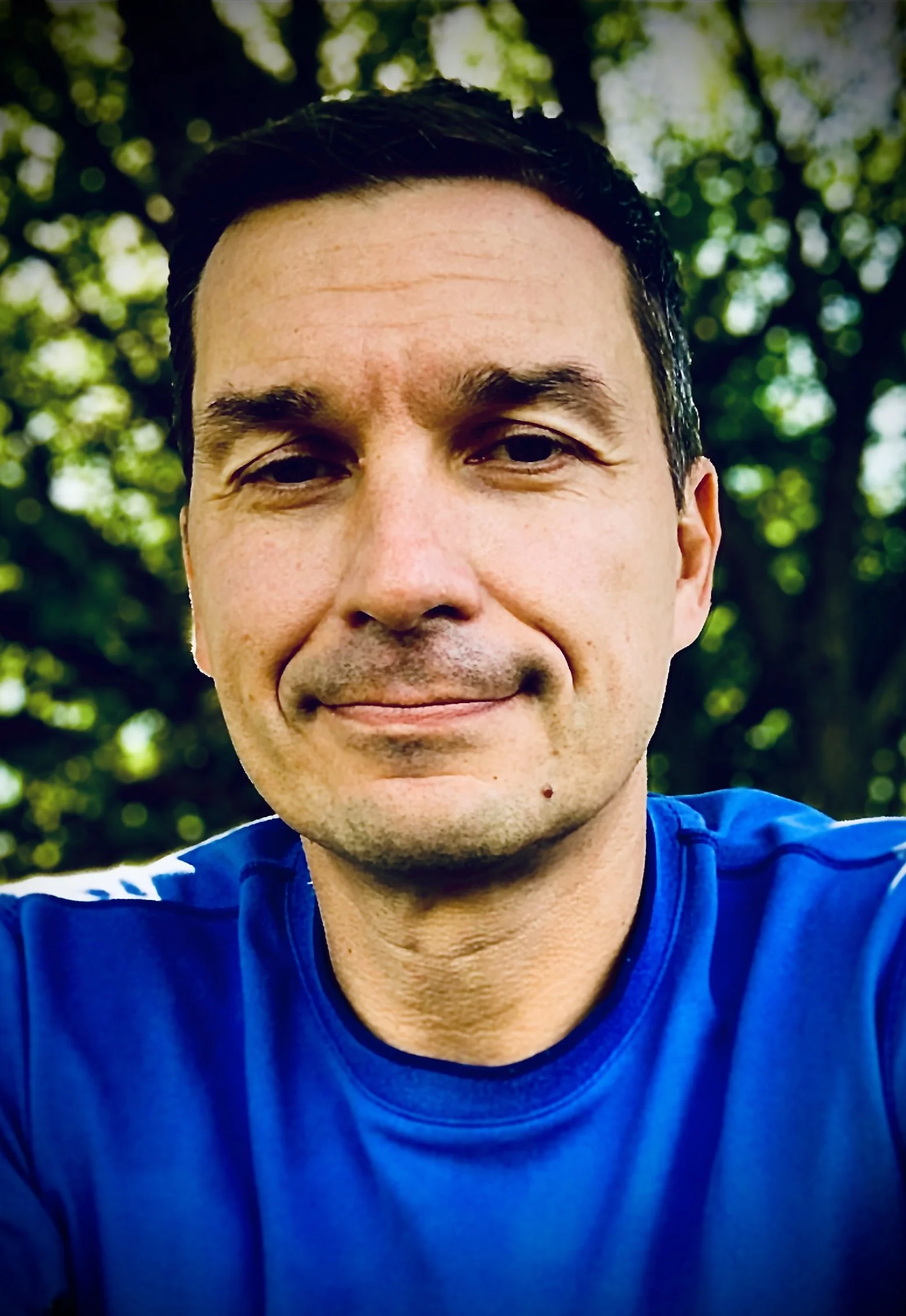
barlow crassmont
has lived in the USA, Eastern Europe, Middle East and China. When not teaching or writing, he dabbles in juggling, solving the Rubik’s Cube, and learning other languages. He has been published by British Science Fiction Association, Mobius Blvd, and in the 41st anthology of Writers of the Future.