The beautiful pause prize 2025 winning and shortlisted manuscripts
Top Manuscripts
Vestige, by Olivia Pierce Graham
($1,000 + publication in early 2026)
Olivia’s submission notes:
Vestige expands on the intersecting themes of femininity, mental illness, hospitalization, and fragmented memory. It is written for those whose inner worlds are richer than their external ones.
Why we love it: Wild surprises.
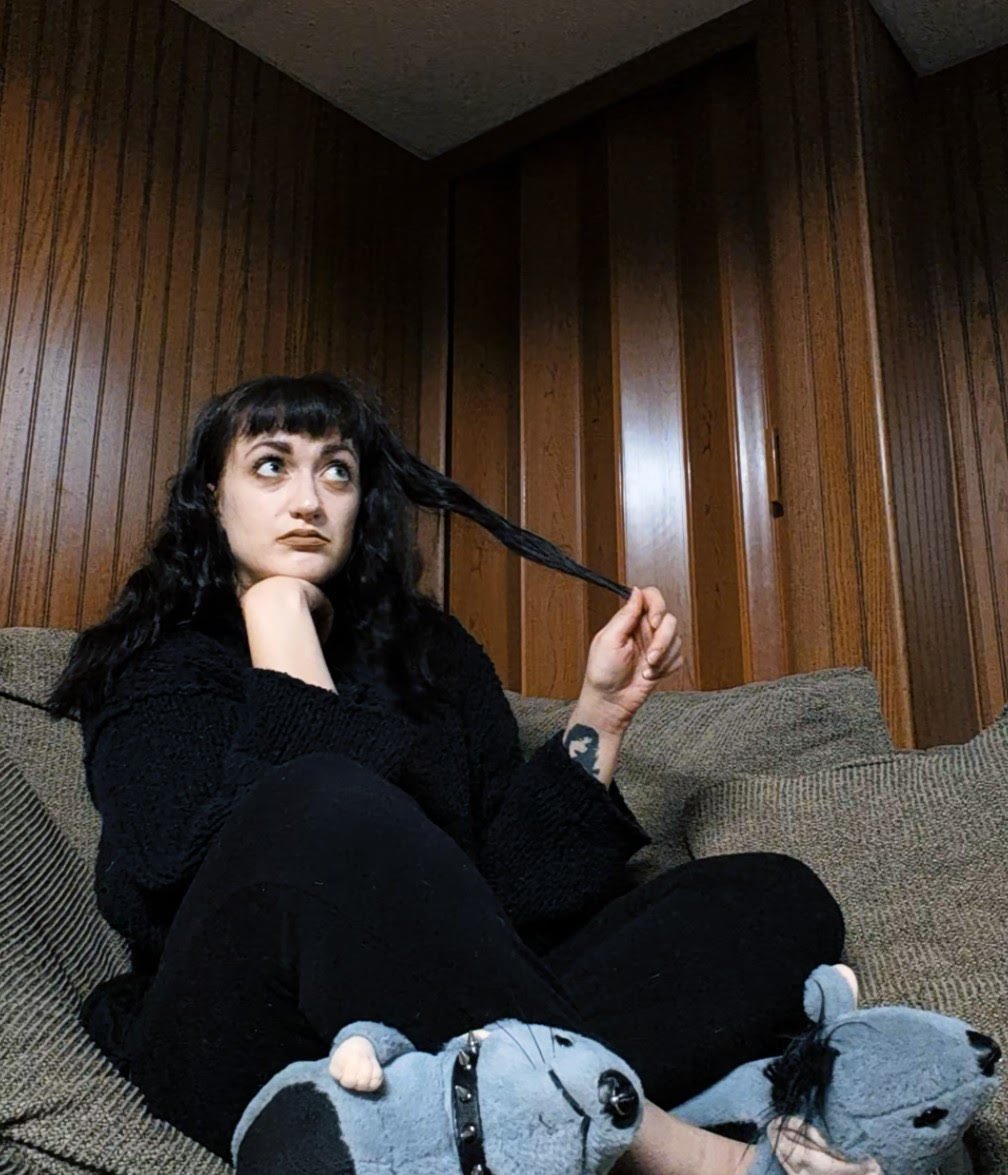
Olivia pierce graham
Olivia Pierce Graham holds an MFA in Poetry from The New School. Her work has appeared or is forthcoming in Beyond Words Magazine, Cathexis Northwest Press, Midsummer Dream House, Oroboro, River & South Review, Sad Girl Diaries, Wild Roof Journal, and others. She is the author of Gloom of Excruciating Desires (Cherry Dress Chapbooks, 2022) and currently serves as Junior Poetry Editor for Lit Fox.
2. Sofa on an Ancient Sea, by Christopher Cokinos
($500 + poems forthcoming in Press Pause Volume 12)
Christopher’s submission notes:
The keywords would be: deep time, the space age, retrofuturism, extinction, childhood, mortality, home, mountains, science fiction, and hope. Love. Acceptance. I wrote this for the reader who stands within the Venn diagram of art, science, and nature. Poets with telescopes who maybe didn't win a science fair but wished they had. I wrote it because I had to, because I honor the insistence of phrases at 3 am, and because I loved writing it.
You'll find no bombs, no explosions, just the little things that add up to make our lives. I believe that narratives make the unbearable bearable, and when we shape life into stories and find the metaphors, we make meanings and, in doing so, we butterfly.
Why we love it: So much awe in its lines.

christopher cokinos
Christopher Cokinos is the author, most recently, of Still as Bright: An Illuminating History of the Moon from Antiquity to Tomorrow (Pegasus Books, 2024), which was named to The Aurarist Best Written Nonfiction for 2024 and the Toronto Globe & Mail Best Books of the Year.
He's written immersive nonfiction about extinct birds and about meteorites, that project taking him to Antarctica on an NSF artist's fellowship. The winner of the New American Press Poetry Prize for The Underneath, he also co-edited Beyond Earth's Edge: The Poetry of Spaceflight (Arizona) with Julie Swarstad Johnson. His lyric essay collection is Bodies, of the Holocene (Truman). His poems and prose have appeared in Scientific American, High Country News, the Los Angeles Times, Orion, and many other venues.
Working with the Netherlands-based Moon Gallery, he is part of a team sending a tiny book to the Moon on a rover due to launch later this year.
He lives in Logan, Utah, with his wife and two cats, having retired from university teaching.
He agrees with David Quammen: "Despair is boring." He likes Star Trek and the Canadian Football League.
3. Hemingway’s Suitcase, by Kaitlyn Owens
(excerpt forthcoming in Press Pause Volume 13)
Kaitlyn’s submission notes:
Hemingway's Suitcase explores the burdens of family inheritance, experiences of grief and loss, the intricacies of relationships, and the complex journey toward self-acceptance.
Why we love it: Yearning, desire, nuance, discovery.
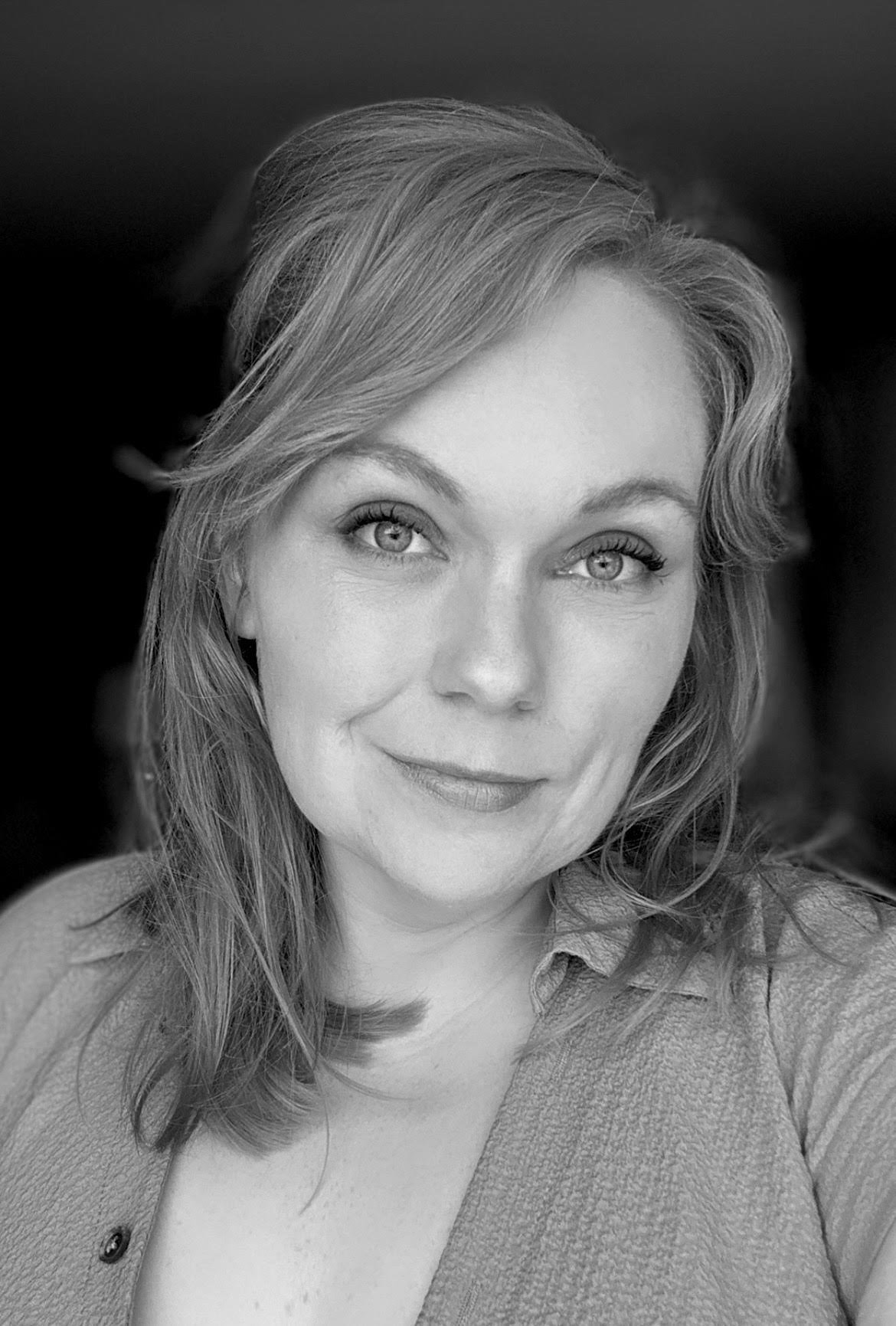
kaitlyn owens
Kaitlyn Owens writes poetry about the inheritances we carry—family patterns unseen on medical forms yet shaping us deeply. Her work appears in Fjords Review and Poetry South, and she received an International Merit Award from The Atlanta Review. A product manager by day and a restorer of old things by night, she believes in naming truths, however complicated.
the shortlist
(Top Eight)
Acceptable Uses for Free Will by James King
James’s submission notes:
Acceptable Uses for Free Will is a book about making choices. In the face of the continuous tyranny of everything, we can make small choices that make a difference in the lives of people close to us. Choosing care, choosing comedy, choosing to just sit and reflect a vista or a moment, choosing to save someone or to steal-—these are what I call Acceptable Uses for Free Will.
A Migrant's Way to Name a Loss He Cannot Pronounce by Nnadi Samuel
Nnadi’s submission notes:
A Migrant's Way to Name a Loss He Cannot Pronounce is an extraordinary study in the way language is explicit, and wounded with intrinsic experimental details of trauma that sparks a new definition around environmental injustice, racial discrimination and identity, in conversation with the symbolism of prominent, historical figures across the world & the underlying powers of Jim Crow's law that served as a restraint towards marginalized groups.
It is an interrogation of silence as a means of making sense of the speaker's trauma, familial displacement & the effect of migration—caused by a dislocation on both land & in language, using these lazy, voiceless linguistic & phonetic symbols /ʃ/, /ə/ to demonstrate the loss of voice, silence, fatigue & restlessness when faced with the language & the systematic dissonance the speaker has towards it.
Lessons from Captivity by Caleb Nelson
Caleb’s submission notes:
I tend to think of poems like bad jokes that can become serious through strangeness and humor. Poets like James Tate, Peter Richards, Mark Bibbins, and Aase Berg are very good at this. Too many amazing writers to name who write this way. Mostly, I think this collection is about the ways I've felt trapped either because of family, religion, school, or even lost love. This book is about coming to terms with those experiences.
Surrey Girl High on Cantaloupe Island by Natasha Zarin
Natasha’s submission notes:
Inspired by the hypnotic rhythms of Herbie Hancock’s Cantaloupe Island, a Surrey girl (the author) drives through her old neighbourhood with the track on repeat. As jazz pulses, memories rise—of childhood and youth, of streets once raced down, of corners claimed. Familiar intersections, vacant lots, overgrown trees, and forgotten buildings unfold like a film reel. The words arrive urgently, part spoken word, part jazz poetry.
Set in Surrey—a city often dismissed, misunderstood, and notoriously looked down upon for being rough around the edges—this collection of poems challenges these perceptions and celebrates the iconic and overlooked spaces of Whalley and Guildford in the 1980s and ’90s—neighbourhoods shaped by pop culture, grit, and the untamed wild.
I wrote this as an homage to specific spaces in time from where I grew up. I wrote it for the people in my neighbourhood—for everyone who knows.
The Unlearning by Adrian S. Potter
Adrian’s submission notes:
Prose poems/lyric essays about understanding what we no longer believe in by forgetting all we think we know.