
my mother’s bones
chris bailey
TWO DAYS BEFORE SHE DIED, she got out of bed and stood barefooted, peering out the sixth-floor hospital window at a thousand city lights dotting the night sky. She pushed open the large double window and breathed in the fatal, February wind, imagining what it would be like to leap. She wanted Death on her own terms, not it dictating hers. Her lungs ached with every small, labored breath as she sifted through memories, searching for the good. There’d been plenty of good throughout the years, but, as of late, remembering those times hadn’t come easy. Less than twenty-four hours later, she’d take that leap, plunging downward to her death on the concrete below and shattering the bones in her body.
December. I stood in the hallway outside my mother’s bedroom, staring at family photos on buttercream walls. At one point, she’d wanted to replace the cream with a muddy gray, the color of whale skin, but somehow, I’d managed to talk her out of it. Coming back to those buttercream walls made me feel warm again. So did seeing the overly ornate, gold-leafed frame above her bed. The picture hung slightly tilted, its angels and cherubic babies slanted on the wall. I stepped across the threshold and into her walk-in closet, which, for as long as I could remember, had been home to the hand-crafted dollhouse she’d made for me when I was little.
When she first started decorating the dollhouse, sewing its curtains and matching bedspreads, I was five and in awe of the whimsical world she was creating. We’d worked together, hanging wallpaper in strips while singing along to “The Little Drummer Boy” playing on vinyl. Now, as I looked through those same windows, swaying to the ra-pa-pa-pum, I wished more than anything that I could go back in time.
“Hey,” my dad said, approaching from behind. “What are you doing here?” His hair was grayer, whiter actually, than just the other day when I’d seen him at the hospital.
“Do you remember those ornaments Mom made years ago? Those eggshell ones?”
He scratched the sagged skin under his right eye and shrugged. I couldn’t help but stare at him, the blood pounding in my head, as I realized that he’d become somewhat of a shell himself, empty with a dulled gaze in his eyes. I looked away from him, peering into the bathroom at the handrails over the toilet, the Depends still on the counter, the small army of pill bottles by the sink. He took a deep breath, matching mine, and smoothed the front of his stained shirt with his crippled hands. It dawned on me that he’d never learned to do laundry. Never changed bed sheets or cooked a roast in the oven. Would he learn how in his late seventies with his broken hands trying to sew a button or fit a sheet? No, that would be my job now too.
I bit my lip, fighting back another fit of anger—not for having to help my father but for my mother’s illness that had stolen so much from us. My fits had been sporadic and plenty since that first day in April when we’d learned of her diagnosis. Six hospital visits in six months, and each one had taken its toll. I twisted my mother’s ring around my index finger, thumbing its delicate Panda face. It was a reminder of her fight and tenacity and how she’d lived for years with a quiet, degenerative disease, one that she’d passed on to my brother and maybe to me too, just like the gold ring on my finger. I turned away from my dad. I didn’t want him to see me break down again, like I had every single day since I’d taken Mom to the ER that last time.
“Hey,” he said, leaning into my shoulder and lowering his voice. “Thanks for everything… for all you’ve done.”
Thanks? He’d said thanks as if I were the help. “Yeah, of course,” I told him, choking back the hurt. I leaned in closer to the dollhouse and moved a tiny dining room chair only to put it right back in its place.
“It’s just been so hard on me. You’re better at these things.”
No. I wasn’t. His quiet, simpering tone traveled across the nape of my neck and down my spine, making me want to crawl inside that tiny house my mother had made me. “The ornaments?” I prompted. “You don’t know where they’d be, do you?”
He pointed to a stack of boxes on a shelf that still held a colorful array of my mother’s floral blouses. They were a springtime bouquet, smelling sweet and fragrant. “Maybe up there? What do you want with them anyway?”
“Not sure. I just remembered them the other day…thinking about Mom and Aunt Pauldi.”
“Pauldi? Why?”
I didn’t know how to answer him, how to tell him that I’d been thinking a lot about my aunt lately and the horrible way she’d died, jumping out of that window to her death. The last time I’d seen her, everything had seemed okay. Then again, before April, everything had been just fine with my mom too.
He sighed loudly, balling his hand into as much of a fist as his fingers would allow.
“I was thinking about that time, years ago, taking the train to Vienna to see her. We had Chinese food on a veranda overlooking the river.”
My dad nodded as I stepped up onto the wobbly office chair in my mom’s closet.
“Maybe we should go,” he said. “You know, take a trip?”
Now? I took a deep breath, scanning a dozen shoeboxes with my mother’s handwriting on them. No…I didn’t want to go there again. “There,” I said, spotting a small brown box marked X-MAS. I pulled it from the shelf and carefully stepped off the chair, balancing the box in my hands. My pulse raced as I opened the top to take a peek, but as I pulled the tissue paper aside, my heart stopped at the sight of the delicate, forty-year-old handcrafted eggshells, shattered. Not all were broken but most.
They’d been stored in a box for decades, seemingly fine, but now, here they were, exposed and broken. But my dad wouldn’t get it, the beautifully sad metaphor I was holding in my hands. I closed the box and sighed. “I can have these, right?”
“Yeah, of course,” my dad said. “Take them.”
Later that night, as I stared at the pieces of ornament on my kitchen counter, I thought about my aunt standing in that opened window, toes teetering on the ledge. I imagined her in a long white gown and with her hair wild and peppered gray, falling loose around her shoulders as she fought with Death. What had it said to her in those final seconds? Had she thought about her daughter as she pressed her fingers to her hollowed womb, to the loose skin of her abdomen? Had she thought about who all she was leaving behind? Had she thought about her bones, broken on concrete, and left behind for someone else to pick up?
I blinked, refocusing my tired eyes on my phone screen. According to the website I’d found earlier, all I needed to repair the ornaments was some epoxy glue and patience, neither of which I had. It was a simple reverse-papier-mâché method, it said, but simple was just one more thing I’d hadn’t had much of lately. I closed the tab on my phone, making a mental note to stop by Hobby Lobby on my way home from work the next day to pick up the supplies.
That night, I couldn’t sleep. I kept thinking about the last time I saw my aunt. I could still feel the cool glass against my forehead as I peered out the taxi window. Grayed, morning light flickered through passing trees as the car inched closer to my aunt’s apartment. It was all so vivid and near that it seemed impossible for it to have happened over twenty years earlier, but it had. Then, in a blink, I was suddenly standing inside my aunt’s dark apartment with its heavy, ornate furniture. It was outdated, yet romantic, with its crocheted doilies and amber-colored ashtrays.
“This painting is beautiful,” I’d said to her. “Did you paint it?”
My aunt nodded, staring at the shallow pool of burgundy at the bottom of her glass as I gazed at the field of red poppies against a dark, muddy sky. Off in the distance was a small figure in the background, teetering at the water’s edge…”
“Is it you?” I asked her.
“No. Just a girl I once knew in Yugoslavia. Are you hungry?” she asked.
We ate noodles by the river under a clear, warm sky. The rain had let up and the sun had come out, offering a few rays of warmth across the cool veranda. About a dozen or so iron tables were lined up outside the restaurant, which lived up to the charming image I’d had of European cafes. I’d always wanted to sit outside and drink coffee in Paris or eat Sachertorte in Vienna. But now instead of coffee or cake, we were having Lo Mein.
After dinner, I returned from the bathroom to find my aunt and uncle standing outside, talking by the river’s edge. My uncle leaned into her, pressing his forehead against hers. He lifted his fingers to her cheek and ran them across the familiar contours of her face. She brushed them away and shook her head. When she looked up and saw me watching them, her cheeks reddened. Whether it was from anger or embarrassment, I didn’t know. All I did know was that it was time to leave. They dropped me off on the curb. That was the last time I saw her—in the passenger window of her Saab as they drove away. Had she already been fighting her illness back then? Had she put on a brave face for me? For everyone for years?
I stopped by Hobby Lobby on my way home from work. Christmas was in ten days, and I’d had it in mind to restore the ornaments and hang them on the tree before then.
“What’s this for?” my daughter asked, peeking inside the sack on the dining room table.
“A project.” I lifted one of the broken ornaments from the box to show her.
“It’s so beautiful,” she said, leaning in to take a closer look.
It was my favorite one. The shell was a vibrant, royal blue and had tiny pearls and thin strips of black velvet crisscrossing its rounded back. Its front had a small opening, outlined in pearls, and on the inside was the world’s tiniest nativity set. I’d always wondered who hands had made something so tiny and delicate.
“The shell…it’s broken,” my daughter said.
“That’s what the bag of stuff is for—to fix them.”
“There’s more?”
All in all, there were thirteen egg ornaments in the box. One had never been finished.
“Yes, quite a few more. When I was little, I used to stare at these on the Christmas tree, all shiny and sparkling under twinkly lights and tinsel.”
“How come I’ve never seen them before?”
“Honestly, I hadn’t thought about them in years. Not until—”
Not until my mother’s bones had started breaking.
My mother’s first hospital visit had brought a cancer diagnosis, terminal but manageable. Chronic Lymphocytic Leukemia was something you could live with for years if the chemo didn’t kill you. But with the second visit, four months after the first, I thought it was doing just that. She couldn’t breathe. The muscles in her body were constantly seizing and spasming. And her bones ached. “It’s like someone is stabbing me in my back,” she’d said. “Please, I can’t bear it anymore.”
“Stop taking the chemo.”
“Can I do that?”
“Yes,” I told her, not knowing if she could or not.
Later, we learned that her bones were crumbling, but not from the chemo. At least that’s what we were told on ER visit number three. My mother’s bones were breaking for no apparent reason other than “possible” osteoporosis—not the cancer. She had two compression fractures. Her L1 and her L4 were broken and required immediate surgery. It took four weeks of recovery and rehab to get her walking again, but eventually, she came home. She stayed five days until we were back in the ER with the same intense pain.
“Everything looks fine,” they’d told us. Her white blood count was in the normal range, meaning her cancer was being managed, and her spine was healing, according to the x-rays. She had no new fractures and no explanation for the intense pain that had suddenly returned. They prescribed her more opioids and sent her on her way. Four days later, we were back in the ER.
They’d missed new fractures in her L2 and L5. Later that night in her hospital room that overlooked the city, she told me: “I don’t want to live like this anymore.”
I pressed my forehead to the eighth-story window and watched as cars passed below in the busy city streets. I didn’t want her to keep suffering either. We’d been there so many times, not in that same exact room, but in that same terrifying place. All those hours of worried pacing and of silent bargaining were back. The first time I’d paced those floors, I was there to give birth to my daughter. I’d labored for hours, praying for everything to be okay, and then in a blink, there she was—her tiny body warm against my skin, still slick with cooling sweat and spent from hours of work. All in all, I’d been pretty fortunate not to have had any reason to go to the hospital, not until my mother’s bones started to crumble.
It was in that hospital room, eight stories off the ground, when I first made the connection between my mother’s broken bones and my aunt’s. Maybe it was a strange parallel, comparing their broken bones, but as I faced the truth of my own mother wanting to die, I couldn’t help but think of my aunt’s suicide. Both women had been suffering for so long, albeit from different diseases. But, my mother’s osteoporosis, like my aunt’s depression, had taken its toll, slowly deteriorating the good inside of her for years. My mother was broken, literally broken, from her illness. My aunt had been broken too.
Now, sitting at my dining room table with my daughter, I thought of her, my aunt leaping from her own six-story hospital window. Visions of her standing on that ledge with her arms spread and ready for the fall had been haunting me lately. How long had she suffered with her illness, her depression? Months? Years? Had it over the years, like my mother’s osteoporosis, secretly and slowly worked to decrease her inner strength? Had she been suffering, too, that day on the veranda overlooking the river?
“Mom?” my daughter asked, sitting down beside me and peering into the box of ornaments. “Can I help you fix them?”
We worked for hours that night applying tiny dabs of glue to jagged edges of shell. The eggs, for me, had become a way of processing the fragility and brokenness inside all of us, especially the women in my family: my aunt, my grandmother, my own mother and daughter. My sister. Even me.
A few days before Christmas, I stood gazing at the plump Spruce in the corner of the living room with thirteen eggshell ornaments hanging from the evergreen branches. Each ornament had been mended as best we could manage. In some places, the glue was visible, so were the cracks. But wasn’t that the point anyway? Life’s little imperfections showing all that we’d survived? I put the last one on the tree, a soft, rose-colored egg with flecks of gold and tiny clear gems. It was the one that had never been finished. Now, on the inside of it was a gold-winged angel figurine, no bigger than the tip of my pinky finger. “What do you think, Mom?” She’d made it home in time for Christmas.
“I haven’t seen these in years,” she said, studying the delicate creations sparkling under soft white lights. “I’m surprised they weren’t all broken.”
“Some of them were.” I glanced at my daughter, wondering if she’d made the connection yet or if my mother had. If so, neither one said anything. I squeezed my mother’s hand then stepped across the room to the French doors leading out to the balcony. I’d been holding my breath for months, forgetting to exhale. Maybe I’d been afraid to. But now, as I closed my eyes, I took a long deep breath and thought about her—a mother, a wife, a sister, a friend—standing on that ledge, contemplating death. She was my aunt. My mother. She was every woman, broken.
“Everything okay out here?” my daughter asked.
I exhaled, releasing the deep ache in my lungs. “Yeah, I’m good.”
There’d been hundreds, thousands, of moments that had been good. As she sifted through a lifetime of them, she came up with too many to count and stepped back inside.
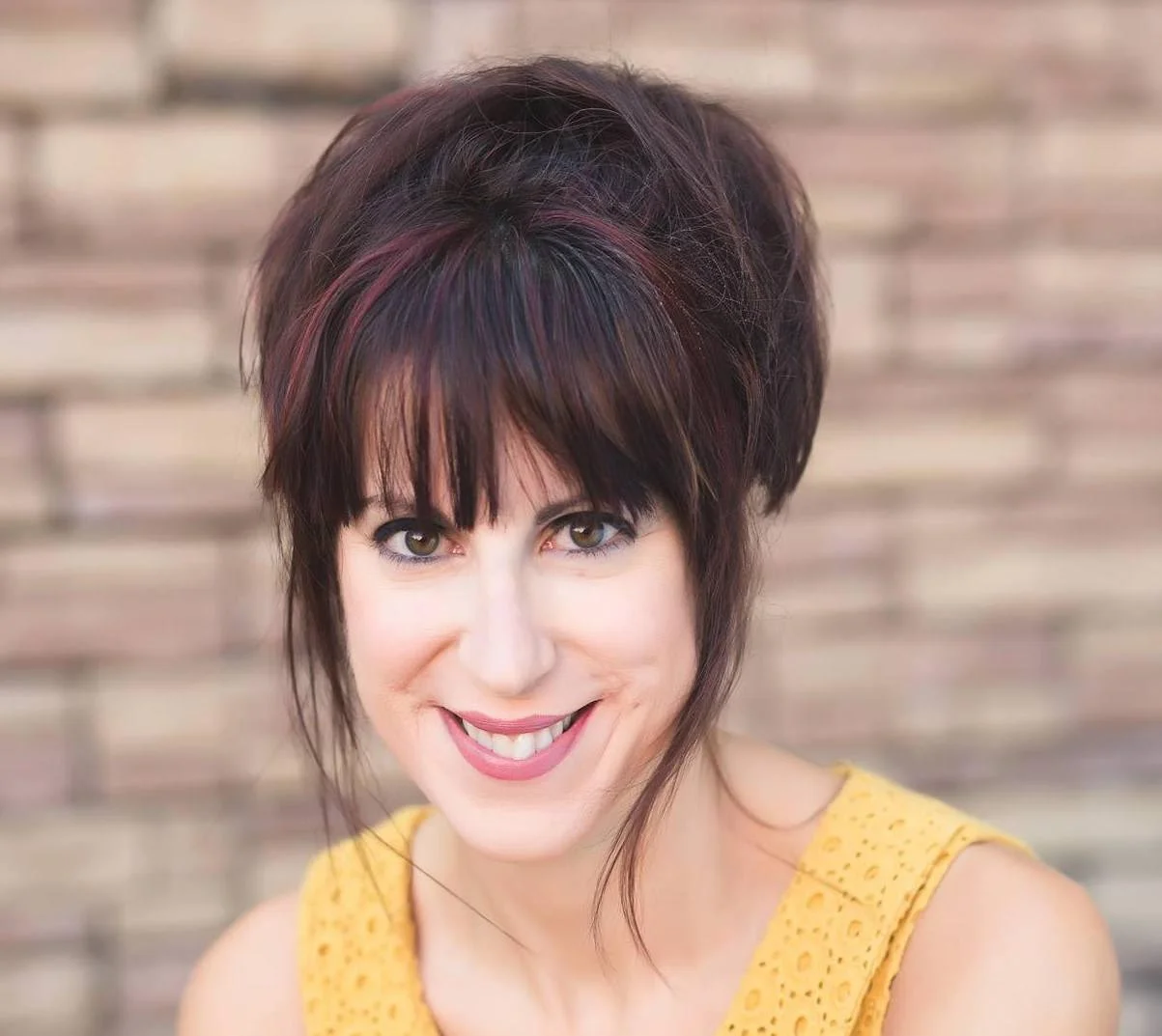
chris bailey
resides in Tennessee, where she teaches English at a mid-size university. Bailey holds an MFA in Fiction and a Ph.D. in Composition. Originally from Toronto, Canada, her writing has been published in various academic journals as well as in literary magazines such as Big Muddy, Flyway, and After Dinner Conversations. She is the author of six YA novels. Her latest, Burning Little Lies (Artemesia, 2024), is a 2024 Moonbeam Children’s Book Award winning novel. She is also the 2024 recipient of the Rick Bragg Prize for Nonfiction. Before teaching, Bailey worked as an editor, a journalist, and a marketing/PR writer.