
featured throwback
hole-punched great depression
commissioned-then-killed photos documenting the Great Depression


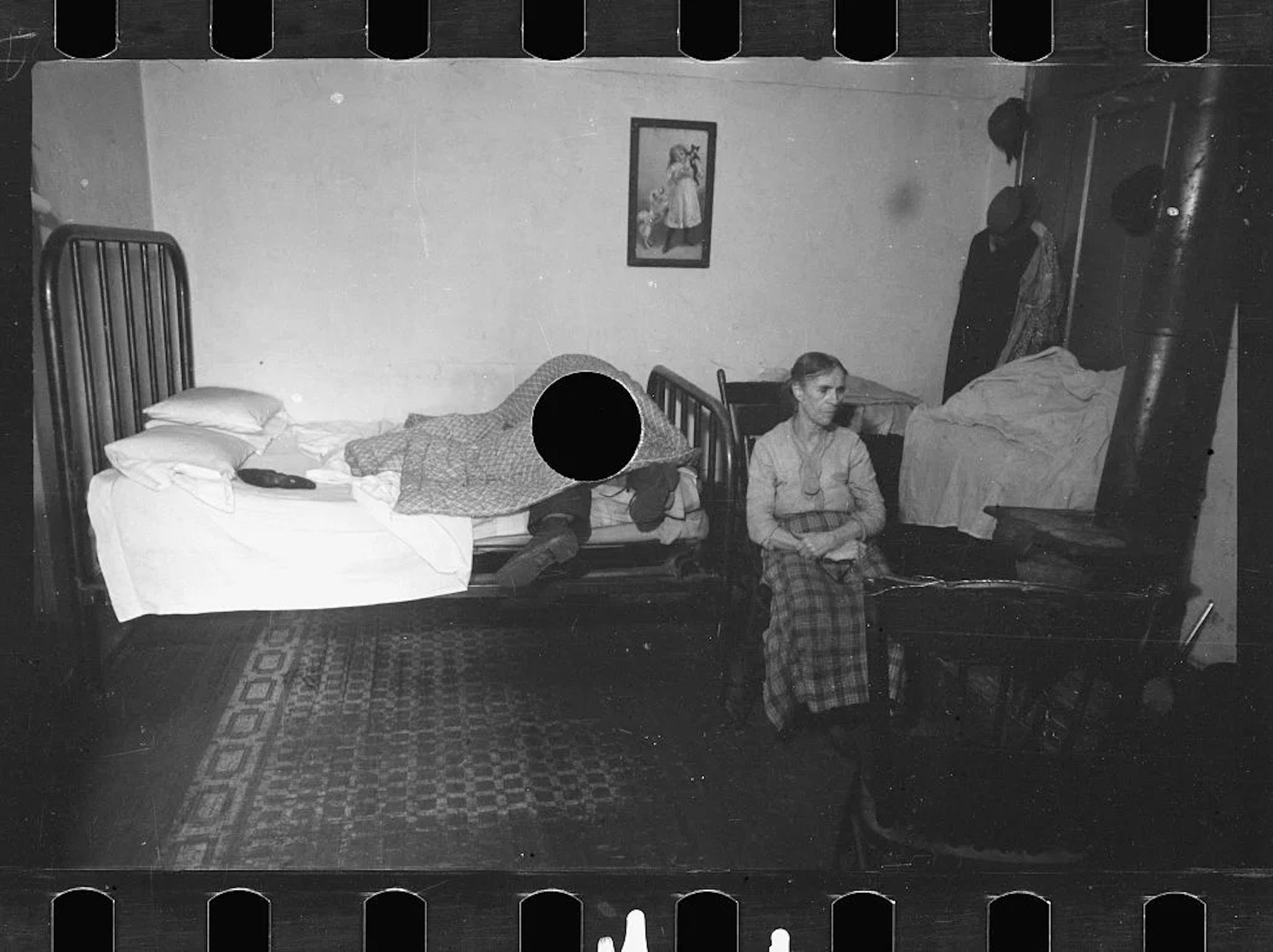

We’re living in a time that feels… punctured.
Economically, yes, but also in a quieter, harder-to-name way. It’s like time itself is being perforated. Interrupted. Rendered into something extractable. Monetizable. Postable. Feedable. We’re constantly being asked to turn our lives into content. To generate meaning instead of let it define itself inside of us. And now, increasingly, we’re being led to let machines make that meaning for us, to do our most important thinking.
So much of what we move through feels preemptively diminished.
This series is drawn from Erica X Eisen’s essay “The Kept and the Killed.” from the Public Domain Review.
During the Great Depression, the U.S. Farm Security Administration commissioned over 270,000 photographs to document American life. To capture its hardship, its resilience, its texture. More than a third were later marked as unusable. “Killed.”
The method was simple and brutal: a hole punched directly through the negative.
As Eisen writes, these images were never fully destroyed—they remain preserved, carrying both the intention to discard and the refusal to disappear. The hole becomes the thing you can’t stop looking at. The absence becomes the subject.
“The ‘killed’ negatives occupy a space between erasure and survival.”
Why weren’t the photos simply set aside? Why did they have to be punctured? What gets kept? What gets killed? Who decides? And what does it mean that even in being “killed,” these images still insist on their presence?
It feels uncomfortably close to our now.
We live inside systems that flatten experience into usefulness. Into data, into narrative, into something legible enough to circulate. And when something doesn’t fit, doesn’t perform, doesn’t convert, it disappears. Or worse, is reshaped until it does.
It’s another kind of hole-punching.
But like these images, our lives still resist it.
There is still something irreducible in a moment, and we must protect the moment itself. It’s something that cannot be optimized or replicated or generated. It’s something that belongs only to the fact that it was lived.
-press pause
the public domain review
This series was sourced from the Public Domain Review. We love them. Sign up for their newsletter and support them if you can!