
shadow
kaylie saidin
MY STUDENT TELLS ME THAT THEY ARE AFRAID of everything, even their own shadow. They are thirteen and feel like this is something they should outgrow soon.
“It’s normal to be afraid sometimes,” I tell them.
My student is young and takes growth very literally. They picture their growth as an olive tree with leaves and fruit and wood expanding outward, with entire branches drying up and dying while new ones sprout darling buds. I haven’t yet told them growth is more like a web of moss, or tentacles, or fungi. You don’t just bloom and expand in all directions. You circle back, retrace your steps. You find that things you thought were dead have only become subterranean, and have never really stopped growing. You become tangled.
Peter Pan, or the Boy Who Wouldn’t Grow Up, has a shadow. The shadow gets stuck on the windowsill and is subsequently rolled up and placed in a drawer. It is a mischievous and active creature, and it often escapes from Peter. He must chase it, catch it, hold on to it. When he flies into the bedroom of Wendy Darling, it is his shadow that he seeks.
I have a shadow that follows me, too. It’s been there for as long as I can remember. The shadow is always there, even when I am flying. The shadow is always there, even when I cannot see it. Sometimes I try to stick it to my feet with soap and sometimes a pretty girl dressed in powder blue comes and sews it to the soles of my feet. Sometimes I try to run away from it, and sometimes it hides from me so I think I’ve succeeded. Sometimes I try to cleave it from me, severing pieces of myself in the process, and other times I fall into the shape of its arms and let it hold me in an embrace.
Peter Pan is in the public domain, so you can write about him as much as you want. You can make him the hero of your story, a villain, a grown-up, a child. He can be any gender, any age, any ability. Inside everyone is a Lost Boy, a piece of us that never grew up and instead spiraled into a tangled knot. Feeling lost, I tell my students when they are working through difficult readings, is normal.
“But I don’t feel normal,” my student says, and they bury their face in their crossed arms and inhale the glossy wooden desk. “I wish I could go back to fifth grade.”
Neverland is the place we go when we let nostalgia take over. When growing becomes difficult, we take refuge for a while in the past, which is all whimsy and coated in a golden syrupy light. We conveniently forget all hardship, and instead recall only the good: remember when things were different? Remember this feeling, which only exists in retrospect? Look up. This feeling is stored in the second star to the right. If you jump high enough, or far enough from your windowsill, you can touch it.
In my first week of teaching, an eleven-year-old lost a tooth during class. He held it out to me in his palm, as if an offering. I took it and wrapped it in cotton gauze, put it in a tiny plastic bag. A small and strange part of me wanted to keep it.
“That was my last baby tooth,” he said, sounding pensive.
“The tooth fairy will come tonight,” I said.
He shrugged. “The tooth fairy isn’t real.”
I wanted to grab his shoulders and say that his mother was the tooth fairy and she was very, very real. His mother was the tooth fairy and she was the funny voices in the picture book and she was the reason the roses in his front lawn bloomed and the reason for the crusts cut off on the sandwiches in his lunchbox. The adults around you are working very hard at magic, I thought. Hold on to this magic, carry it with you as you grow. You don’t have to let it go.
Peter first shows up in J.M. Barrie’s The Little White Bird. He is seven days old when fairies and birds encircle his nursery and teach him to fly. He flies out the window and over London, a half-bird, half-infant. When he returns, he finds that the window is shut and his mother has forgotten him. A new baby is lying in his bassinet, swaddled in his blanket, fast asleep. Peter realizes that this is the changeling—the thing that has been left in place of him. He belongs to the fairies now.
“I don’t know what happened to my sweet girl,” a mother says to me as she cries during our parent-teacher conference.
When we do an activity on dream sharing, several of my students report having dreams about their teeth crumbling, cracking, and falling out. Several others share that they have nightmares about losing their parents, or worse, their parents turning on them, forgetting them, discarding them and moving on. Peter Pan, at the age of twelve, still has all of his baby teeth.
Some people think that Barrie based Peter on the memory of his older brother, who died in an ice skating accident before his 14th birthday. My coworker, who has been teaching as long as I have been alive, tells me about all the former students of his that have died. Overdoses, suicides, leukemia, drunk driving accidents, swimming in the ocean during a storm and succumbing to the sudden pulse of a lightning strike ricocheting through the water’s currents.
“To die would have been an awfully big adventure,” Peter says, after almost dying on Marooners’ Rock.
Childhood is the kingdom where no one ever dies, wrote Edna St. Vincent Millay.
My coworker tells me about these children in the casual tone reserved for speaking about the unspeakable. His blue eyes are creased with the feet of crows.
Five brothers were the inspiration for Barrie’s Peter Pan. Michael Llewelyn Davies is purportedly the one who inspired Peter’s character the most. Just before his twenty-first birthday, Michael drowned in the River Thames with his best friend in what many suppose was a suicide pact. Their bodies were recovered clasped together, two lovers bound under turbulent waters who believed a life in the stars would treat them better than the adult world they inherited.
Child Protective Services is called to my school on a cloudless day when the azaleas are in bloom. Birds sing as the social worker appears. She has hair to her waist, like a mermaid. She plays in a local volleyball league. She gets down on one knee, so that she can see the child’s face. I believe this woman can be trusted, but I watch the child shrink away from her, wrinkle their nose, and pull the curls of their hair.
In the original play, Peter says no one must ever touch him. He says he does not know why.
Many of my students have shadows. I watch them play with them each day, get to know them. We are reading books that deal with death, with violence, with desire. Some of them are learning these things and some of them have come to know them already. Either way, they are no longer sleeping with the glow-in-the-dark light shaped like a red-breasted robin. They are becoming comfortable with darkness.
In Hans Christian Andersen’s “The Shadow”, a man’s shadow is severed from him. It becomes its own person with its own life. Eventually, it takes his identity. The shadow becomes the man, and the man becomes the shadow. According to Jewish lore, demons have no shadows—they are only visible light without darkness, and this is how they can be spotted as imposters. But a person, if they are not careful, can be overtaken by their own shadow.
“I feel angry all of the time,” my student says. “And I feel sad. I don’t want to think about any of the things I think about.”
Neverland is a place of childhood indulgence, a place where growth is frozen and we are only half-alive. Everything there is made up of imagination: the food, the wolves, the lagoons, the trees. But while you are there, a crocodile is chasing you and threatening to chomp you to pieces.
He has a clock inside of him that goes tick tick tick. Time is still moving in Neverland. “Stars are beautiful,” writes Barrie, “But they may not take part in anything, they must just look on forever.”
The children return to their families because Wendy wants to grow up. They sail on a pirate ship through the sky, float through the open window, and return to their beds. They themselves are the changelings. They journeyed to Neverland and still chose to leave it behind, and because of this, they are forever changed.
Place your ear to the soil, I tell my student. You can hear the roots growing below, in those hidden places we do not see. Do not underestimate the verdant and tenebrous underground. You can still fly even when all of your teeth are big. You are still young enough to see fairies in the glitter of a body of water. Now you know that there is no light without the absence of it. Choose to grow up not in spite of the shadow, but because of it.
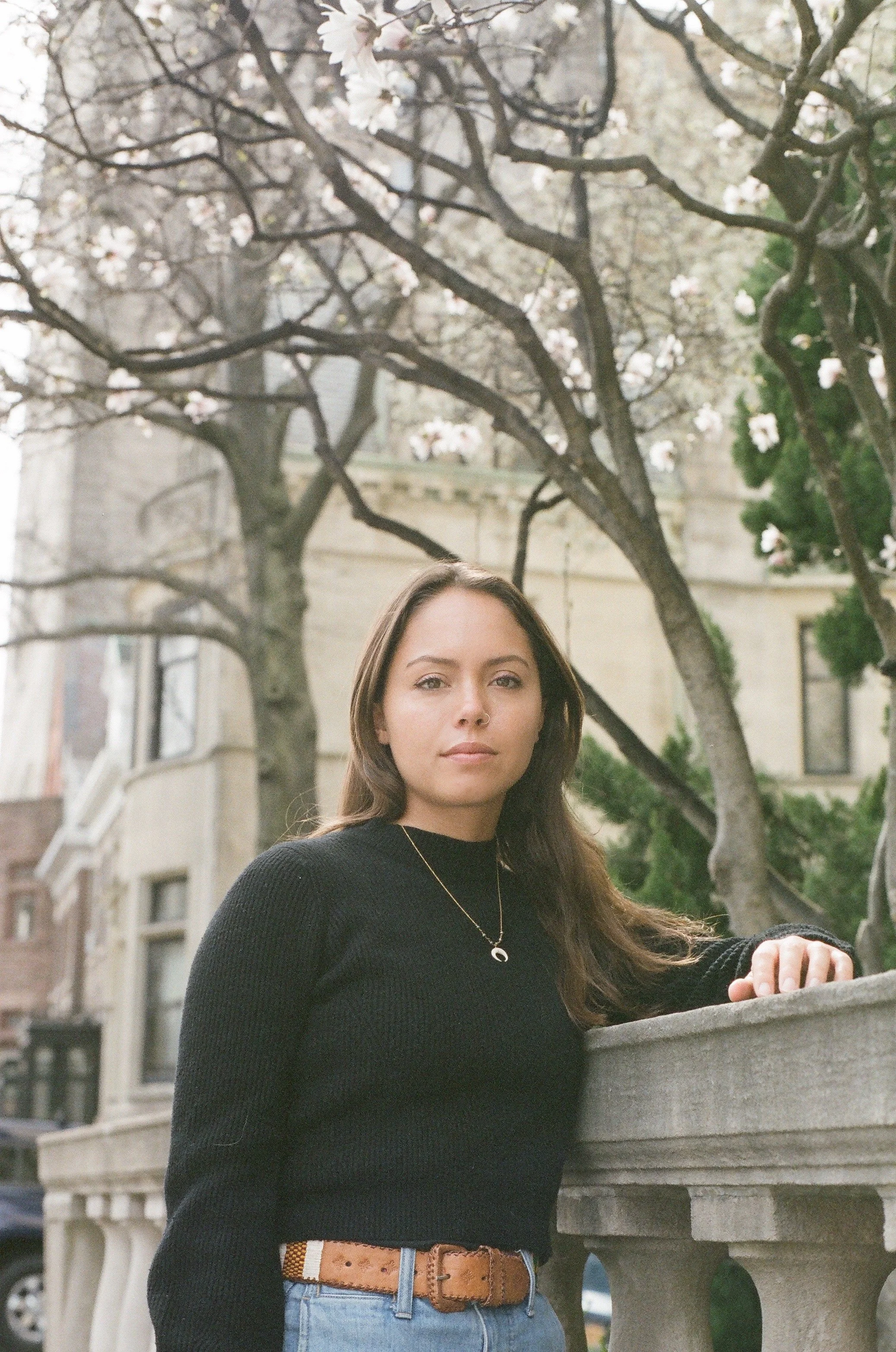
kaylie saidin
is a North Carolina based writer. She holds an MFA in Fiction from UNC Wilmington, where she served as Fiction Coeditor at Ecotone Magazine. She was a finalist for the 2025 Prairie Schooner Book Prize. Her work has appeared in Oxford American, Prairie Schooner, New Orleans Review, and elsewhere.