
Cruise to Nowhere: Nine Days with My Mom
ronnie ashline
At forty-seven, I have perfected the art of vacation planning the way other people perfect serial killing—with obsessive attention to detail and a delusional belief that if I control every variable, nothing can go wrong. This is not a stretch for a child of the 80s who wrote schedules for dolls, created low-fat diets for girl scout badges, and woke up at dawn to exercise with Jane Fonda on VHS. This is what OCD and anorexia does to your brain: it convinces you that spreadsheets and discipline can fix people.
So naturally, when I decided to take my seventy-two-year-old mother on a European cruise, I approached it like I was planning the invasion of Normandy. Six months of research. Weather forecasts. Clothing recommendations. Detailed itineraries that would make a military strategist weep with envy.
What I failed to account for was that my mother, fresh off a twenty-five-year hydrocodone addiction and still wrestling with what I will euphemistically call “narcissistic tendencies,” had her own itinerary. It involved the ship’s bar and absolutely nothing else.
Here I was, somehow genuinely surprised when the woman who taught me that owning a wine stopper was the sign of a quitter chose conquering a bottle of Chivas over exploring the hills of Bilbao.
Day 1: Welcome to the Shit Show
Our adventure began at JFK, where we met Chanel, my Mom’s new-found drinking buddy returning from Hawaii. Despite being fifteen years younger than me, Chanel had mastered something I’d spent four decades trying to learn: how to interact with my mother without internally hemorrhaging.
“So where are you headed?” Chanel asked, cocktail already in hand because apparently airport bars open at dawn.
“Lisbon, then a cruise. I’ve planned every detail down to recommended sock thickness,” I said, immediately regretting how psychotic that sounded.
Chanel didn’t even blink. Given that she had already spent a couple hours with my mom, I probably sounded normal.
We bar-hopped through JFK like college students, except that we were three generations of women with substance abuse issues and emotional baggage that could fill its own cargo hold. Chanel shared her personal stories of growing up in foster care, her dad’s abandonment, and her mom’s battle to reclaim her children. My mom rebutted like it was a competition, and boy does she have more than enough material. She talked of her parents fighting, her mom laying on the floor drunkenly calling to her children, “Look! Your father is hitting me!” and having to pick up her little sister who had been caught stealing shoes because she didn’t have any. I nodded empathetically. There would be no swapping of stories for me, and, assuming my mom’s stories hadn’t become exaggerated over time, I admit I had the easiest childhood, even if it was still surrounded by crazy. I watched Chanel navigate my mother’s repetitive questions and forgotten stories with the grace of a diplomat. No flinching when Mom asked what she was eating for the fourth time. No eye-rolling when she forgot Chanel’s name mid-conversation and started calling her “Chelsea.”
I took notes. This was how normal people handled crazy—with the kind of patience I’d never developed despite forty-seven years of practice.
On the flight to Lisbon, I practiced Portuguese phrases while Mom repeatedly asked what was on her dinner plate.
“It’s still chicken,” I said, my voice tight with the effort of sounding patient.
“Well, isn’t that fancy! Free wine on an airplane!” She said this like she’d discovered fire.
We watched Beetlejuice, Beetlejuice on our individual screens, and for a moment, I felt like we were sharing an experience. Then I realized I was forty-seven years old, getting excited about synchronized movie-watching with my mother. My expectations had gotten so low they were literally based in the underworld.
After landing, I persuaded my mom to use a wheelchair through customs. I knew it bruised her ego, but I also knew that without it, our two-hour journey would become a four-hour odyssey of rest stops and complaints. To make it fun, I let go of her once as she rolled down a slope between gateways. It might have been more fun for me than for her, though. At baggage claim, she confidently pointed to a bright pink new suitcase.
“That’s mine,” she declared.
It wasn’t. Her actual suitcase was maroon, stained, and sitting on a different carousel entirely—the luggage equivalent of my mother herself: worn, in the wrong place, and requiring me to do extra work to locate it. I chalked this up to the perfect storm of alcohol, possible dementia, and cataracts, and made a mental note to tell my kids to be nice to me when I inevitably lose my mind.
Lisbon was beautiful in that way that makes you understand why people write poetry about cities. Unfortunately, my mother had the aesthetic appreciation of a potato. While I marveled at 18th-century architecture that had survived earthquakes and wars, she complained about cobblestones.
“These stones are killing my back,” she whined after approximately thirty seconds of walking.
I abandoned my carefully researched walking tour in favor of a taxi. This would become the theme of our trip: me planning thoughtful cultural experiences, her reducing them to their impact on her various ailments.
At dinner, I ordered bacalhau à brás and tried to explain the historical significance of salt cod to Portuguese maritime culture. Mom ordered fish soup, then complained it was too fishy.
“It’s fish soup, Mom. What did you expect?”
“I don’t know, but not this.”
This is my mother in a nutshell. Meanwhile, I’d been gaining weight for this trip—a significant victory in my anorexia recovery that I was proud of for once. When I mentioned this to Mom, she blinked in confusion.
“Oh, I forgot you were sick,” she said dismissively, before adding the kicker: “You shouldn’t gain any more weight, though. You’re at the perfect weight to make people jealous.”
Day 2: The Pattern Emerges
Day two established what would become our routine: me rising early, bringing food to Mom’s room like room service for the emotionally unavailable, suggesting activities, and eventually going alone when she declined.
“I brought you breakfast,” I said, setting pastries on her nightstand.
“Thank you, sweetie,” she mumbled without opening her eyes. “Maybe I’ll join you for lunch.”
Narrator voice: She would not join me for lunch.
That evening, we dined at the ship’s steakhouse, where I ordered canapés for our cabin—elegant little appetizers we could request anytime during the cruise.
“What are canapés?” Mom asked blankly.
“Small appetizers. Fancy finger foods. I thought they’d be nice to have in the room.”
“Oh, that sounds lovely,” she said, then immediately forgot this conversation had ever happened.
We dressed for the ship’s elegant night. Mom complained about having to “get all fancy,” then spent dinner criticizing other passengers who were also dressed up. I nodded and asked her how her food was, reminding myself that if I kept to the rules of engagement, I could prevent any disagreement.
Day 3: The First Abandonment
Our first port was A Coruña, where I’d planned to visit Torre de Hércules, a Roman lighthouse that’s been guiding ships for nearly two thousand years. I explained this to Mom over breakfast, comparing it to the ship of Theseus—if you replace all the parts, is it still the same thing?
The question felt uncomfortably relevant. How much disappointment can accumulate before love becomes something else entirely?
“I don’t think I can go today,” Mom said. “I’m achy and have this cough.”
My heart performed its familiar sinking routine. Of course she was backing out. This was the woman who missed our last trip together because she had “a stomach thing” but somehow couldn’t remember that excuse when I asked how her stomach was feeling afterward.
“You should see the ship’s doctor,” I suggested.
“I will,” she promised.
She wouldn’t.
“Don’t forget about those canapés I ordered,” I said. “You can call room service anytime if you get hungry.”
“What canapés?” she asked, looking genuinely confused.
“The ones we talked about yesterday. The appetizers for our room.”
“Oh, right. Those.”
She had absolutely no idea what I was talking about.
I spent the day exploring ancient lighthouses and contemplating how a 2000 year-old pile of rocks could function more reliably than my own mother. When I returned, I found her at the ship’s bar, miraculously recovered, flirting with the piano player.
“There you are!” she called, as if I was the one who’d gone missing. “I feel much better now. We can definitely do Bilbao tomorrow!”
Hope is a cruel drug. Mix it with alcohol and it becomes faith. I knew better, but I let myself believe her anyway.
Day 4 : Bilbao and the Art of Self-Deception
Surprise! Mom was “still not feeling great” the next morning. I’d received another cancellation with the reliability of sunrise.
“But I’ll definitely unpack today,” she added, as if organizing her suitcase was a worthy substitute for experiencing the Basque region.
“Remember those canapés if you get hungry,” I said. “Just call room service.”
She stared at me like I’d started speaking in tongues. “What canapés?”
“The ones I ordered. For our room. We’ve discussed this twice now.” I immediately felt bad, remembering that one day I would also lose my mind and ask my kids the same question over and over again.
“Oh, sure,” she said with the confidence of someone who had no fucking clue what I was talking about and zero desire to try.
I went to Bilbao alone, rented a bicycle, and practiced Spanish with locals who probably thought I was having a stroke. I collected shells for my children and took photos of parasailers, thinking maybe Mom would enjoy seeing them.
This is the delusion of the perpetually disappointed: we keep trying to include people who have made it abundantly clear they don’t want to be included.
When I returned, Mom was at the bar again, fully recovered for cocktail hour.
“I’m sorry I missed Spain,” she said with practiced sincerity. “I know you worked hard planning that.”
“It’s okay,” I lied.
“And I promise I’ll unpack tonight. Definitely. And I’ll definitely be ready for France tomorrow.”
The double “definitely” was her tell. Whenever Mom said something would “definitely” happen, I could guarantee it wouldn’t. It was like a reverse prophecy, perfectly accurate in its inaccuracy.
Day 5: Bordeaux and Brief Hope
To my genuine shock, Mom joined our Bordeaux excursion. Apparently, the promise of French wine could overcome even her most creative ailments.
“I wouldn’t miss wine in France,” she declared, as if this was a reasonable explanation for missing everything else.
The shuttle ride through Médoc’s vineyards was actually pleasant. Mom gazed out the window while I crocheted, both of us quiet for once. For a moment, I almost relaxed.
Big mistake.
At La Cité du Vin, Mom’s determination to “get some wine in France” collided with reality. The short walk from the shuttle proved challenging, requiring multiple rest stops.
“I need to sit down,” she gasped, clutching her chest theatrically. “I’m not sure I can do this.”
I selfishly suggested she sit this one out, imagining an hour of peaceful museum exploration without managing someone else’s symptoms. But no—she insisted on coming, not wanting to “let me down.”
The irony was suffocating.
Inside, I practiced French with museum staff while Mom trailed behind, showing all the cultural curiosity of a houseplant.
“Did you know they use machine learning to monitor grape health now?” I said, pointing to a display about my company’s technology.
“I know more about wine from working at Galena Cellars than this museum does,” she replied dismissively, having glanced at exactly zero exhibits.
At the tasting, we sampled a perfect Bordeaux red while overlooking the city.
“What do you think?” I asked.
“It’s really good! I don’t usually like red wines, but this one is super drinkable.”
Just when I was ready to write her off completely, she’d say something perfectly reasonable. So vulnerable am I to these rare moments of clarity, they temporarily cause me to forget years of misdeeds, making me feel like the world’s worst daughter for my internal criticism.
On the shuttle back, Mom suddenly announced, “I’ve always wanted to see Paris.”
I stared at her. “But we discussed this. You said it would be too rushed—five hours of driving for two hours in the city.”
“Well, I’ve changed my mind. It would be a shame to be this close and not see the Eiffel Tower.”
This was classic Mom: rejecting sensibility after having a completely reasonable, agreed upon plan. My brain wandered off to 20 years earlier when she decided she wanted to start mountain biking. We settled on a moderately priced, lightweight bike that was sturdy, but could also be pushed or carried up steep slopes as she was learning. When I went out with her for the first, and last time, I discovered that at the last minute she had decided on a $150 bike from Walmart. It weighed as much as I did, and I couldn’t even get the bike up a hill by pushing it.
But I was my mother’s daughter in ways I didn’t want to admit. Anorexia is an addiction to control without thought of practicality, and her eventual adoption of my ideas was like heroin—just enough validation to keep chasing the dragon.
“I could look into a shuttle to Paris from Le Havre,” I heard myself saying.
“That would be wonderful,” she beamed, patting my hand like I’d offered unprompted. “You’re so good at planning these things.”
Day 6: The Birthday Betrayal
Day six was a sea day, which meant ship activities and—hopefully—time to bond. I’d scheduled a special Dr. Seuss-themed birthday breakfast, a silly celebration I was secretly looking forward to.
“Rise and shine, Mom,” I said cheerfully. “We’ve got that birthday breakfast at nine.”
Mom pulled the blanket over her head like a toddler. “I don’t want to go.”
The words hit me like cold water. This was for my birthday. My fucking birthday.
“What? But I reserved it specially. It’s Dr. Seuss themed.”
“I don’t feel like it,” she mumbled. “You go without me.”
So I did. I sat alone at a table decorated with Thing 1 and Thing 2, enduring the pity of staff who clearly wondered what kind of loser celebrates their birthday solo at a children’s breakfast.
“Would you still like us to sing ‘Happy Birthday’?” the host asked gently.
“No, thanks,” I said, my voice bright with false cheer. “That won’t be necessary.”
I ate green eggs and ham in silence, taking photos with costumed characters while other families enjoyed normal intergenerational bonding. I even collected autographs for my absent mother, because apparently I’m a masochist.
Afterward, I wandered to the ship’s photo display to buy a framed picture of us. What I found instead was a photo of Mom with the Cat in the Hat—taken during the breakfast she’d skipped.
She’d had time for a photo op but couldn’t be bothered with the event I’d planned.
I grabbed the photos and threw them in the trash, then immediately bought a different one to frame as a gift, because healthy responses to betrayal are not my specialty.
Back in the cabin, I ate all the snacks I’d brought for Mom, stuffing chocolates and cookies into my mouth with increasing self-loathing. When I caught my reflection in the mirror, I looked like what I was: a desperate, angry, middle-aged woman with chocolate on her chin and Mommy issues.
I was eating partly to spite her, piling pastries onto my plate with rebellious glee even as my body protested. The self-sabotage felt like both rebellion and surrender—a way to punish her by punishing myself, which is basically the eating disordered version of cutting off your nose to spite your face.
When Mom returned, I presented her with the framed photo and cruise mug.
“Oh, how sweet!” she exclaimed. “I took a photo with the Cat in the Hat as a joke for you, but I couldn’t find it when I went to look.”
“Oh…” I paused, hoping she would change the subject.
“It was so cute! I asked the shop why they didn’t print it and no one knew!”
“Why would that be a funny joke?” I asked, my voice tight. “You ditched my birthday breakfast but had time for photos?”
She looked genuinely confused.
“I didn’t mean it that way.”
“Then how did you mean it?”
Silence.
That evening, Mom gestured toward a formally dressed couple. “Look at those people,” she snickered. “They think they look so classy.”
“I feel like you are being mean. People have fun getting dressed up. I’m dressed up, Mom.”
She squinted at me like she was trying to solve a math problem. “I couldn’t tell.”
This is what passes for maternal support in my family.
Then she turned to the man next to me. “You better be nice to my daughter. She’s very sensitive.”
I wanted to dissolve into the floor.
Day 7: Le Havre and Medical Drama
Day seven brought our arrival in Le Havre, and Mom’s cough had worsened overnight to the point where she sounded like she was auditioning for a tuberculosis revival. I struggled internally between three childish thoughts: I told you so, wow, it would suck if you died on this boat, and I guess we don’t have to go to Paris today!
“I can’t go today,” she rasped. “But I’ll see the doctor. I promise.”
For once, she actually kept a promise. When I returned from exploring Le Havre’s post-war architecture and hanging gardens, I found her examining a tray of elegant appetizers with the bewildered expression of someone who’d been delivered diamonds from a secret admirer.
“Did you order food?” she asked.
I laughed so I wouldn’t cry. “Those are the canapés I’ve been mentioning all week. The ones I pre-ordered for our room.”
Her eyes squinted as she tried to piece it together. “I didn’t know about these! Are they already paid for?”
“Yes, Mom.”
She’d been ignoring me so completely that she hadn’t processed a single word about the food I’d arranged. It was like living with someone who had selective hearing loss, except instead of missing high frequencies, she missed anything that didn’t directly involve her immediate needs.
For the past week, I’d been mentioning these canapés daily—sometimes multiple times—like a broken record playing to an empty room.
“The doctor said if I’d waited one more day, I would have had pneumonia,” she announced, launching into a detailed medical recap while I tried to share my day’s adventures.
“I went to the cathedral and lit a candle for you,” I interrupted.
She glanced at the postcards I offered, then set them aside. “That’s so sweet.”
“I also saw this incredible skinny house that’s only six feet wide—”
She was staring out the window, not listening at all. I stopped mid-sentence to test my theory. She didn’t even notice.
“I promise I won’t be a bummer on the last day,” she said suddenly, turning back to me. “I’ll definitely get off the ship.”
“You’d better,” I said dryly. “They won’t let you stay when everyone disembarks.”
Day 8: Dover and the Final Humiliation
Our last port was Dover, where Mom’s insistence that she could walk two kilometers to the train station met reality with predictable results.
The walk that should have taken twenty minutes stretched to over an hour. Every few blocks, Mom would collapse onto a bench, gasping dramatically.
“I need to rest. I think I’m going to pass out. If I pass out, just keep going.”
A kind Texas gentleman offered to help with her suitcase. “Oh, that would be wonderful,” Mom gushed. “I told my daughter that if I pass out, she should just keep going.”
I felt a flash of rage at this characterization—like I was some heartless daughter dragging my poor, frail mother through the streets of Dover.
After covering maybe half the distance, Mom admitted defeat. “I can’t walk anymore. We need an Uber.”
“That’s what I asked you about yesterday,” I said, my patience finally snapping. “You insisted you could walk. There’s no Uber here—I would have had to call ahead.”
“Well, I didn’t know I would feel this bad,” she snapped back. “I’m not doing this on purpose.”
No, but she was doing it with perfect predictability.
I spent forty-five minutes calling cab companies while Mom sat on a bench looking like a Les Mis poster of an aging Cosette who, instead of being abandoned by her mother, had been forsaken by her own child. Finally, one driver agreed to come if we could wait an hour. An hour. To drive us 1 kilometer. I agreed.
We waited at a Costa coffee, where I ordered hot chocolate, a croissant, and a stroopwafel, continuing my pattern of emotional eating that had marked the entire trip.
“I don’t know how you can eat all that,” Mom commented.
Shame rose in my throat like bile, but I kept chewing. At this point, rebellion through carbohydrates was the only comfort and control I had left.
At our B&B that evening, I found myself at the pub across the street, slowly savoring what I knew would be my last drink before the thirty-day fast I was already planning. Because when you can’t control your mother, you control your body. It’s the anorexic way.
Mom appeared seven minutes into my peaceful solitude—exactly long enough for me to take three sips and begin to relax—claiming the chair across from me like she had squatter’s rights to my mental space.
As we sat in strained silence, the local bus rumbled past.
“Look, it’s your tour bus, Ronnie,” she said with what she clearly thought was hilarious wit.
I stared at her. “That’s the bus route we were supposed to take to the BnB.”
“You mean we would have just gotten here now?”
“No, Mom. That’s the route we could have taken instead of our three-hour ordeal.”
“Oh,” she nodded sagely. “Well, I think the way we did it worked better.”
The audacity was breathtaking. After three hours of drama, delays, and near-collapse, she thought our way was better.
“It took us at least 2 extra hours,” I said, my voice rising. “I just needed you to be honest when I asked yesterday.”
Her face crumpled into exaggerated contrition. “I’m sooooo sorry. Sooooo sorry.”
Something snapped. “Yeah, I can tell by how many times you’ve said it.”
I stood abruptly, needing to escape before I said something unforgivable. “Don’t forget we’re not home. Look right before crossing. It would be a shame if you got smushed.”
The words were out before I could stop them. If she actually got hit by a car, I was definitely going to hell, but at least I’d have company.
When I retreated to the restaurant next to our BnB, Mom followed me there too. The server brought her a small cup of lentil soup.
“This is a canapé for before your meal,” the server explained.
Mom looked at me, completely bewildered. “What is this?”
“A canapé,” I replied, struggling to keep my voice even. “I guess they give you something small before your main meal.”
“What’s a canapé?” she asked, staring blankly at me.
I nearly choked on my tea. After an entire week of me repeatedly mentioning the canapés I’d ordered for our cabin—reminding her daily, sometimes multiple times a day—she had absolutely no idea what the word meant. The universe was apparently committed to this cosmic joke.
Day 9: The Iceland Revelation
Later that night, as we settled into the B&B, I had a moment of clarity that felt like sobering up from a ten-day drunk. Dover had been a bust—I’d seen nothing but sheep and the inside of a chain coffee shop. Tomorrow we had Iceland, where I’d planned a relaxing day at the Blue Lagoon with spa treatments and a three-course lunch.
“Mom,” I said, “are you actually going to do any of the things I planned in Iceland?”
She looked genuinely hurt, her face crumpling in that way that used to make me rush to reassure her. “I really wanted to go, Ronnie, but if you don’t think I should, I guess you know best.”
The manipulation was as transparent as a mirage. I shook the deception from my brain and went outside to call the airline and change our flights, but my international SIM card had no signal and the WiFi was weaker than my mother’s commitment to anything that didn’t involve herself.
I took a deep breath and returned inside. “Okay, let’s do Iceland.”
Later, as we were falling asleep, Mom asked with studied casualness, “Did you make a decision about Iceland tomorrow? If not, I do really want to go.”
“Sounds like a plan,” I said, my voice flat with resignation.
The next morning, we flew to Iceland where, aside from the grueling 4 minute walk from the airport, my mom didn’t leave the hotel. Once again I found myself floating alone, this time in the milky blue water of Blue Lagoon, surrounded by otherworldly volcanic landscapes, contemplating the absurdity of it all. Here I was, in one of the world’s most spectacular natural wonders, having dragged my mother to 5 countries in 9 days purely to have her experience the inside of hotel rooms and cruise ship bars.
The geothermal water was supposedly healing—rich in minerals, good for the skin, restorative for the soul. I closed my eyes and let myself float, wondering if there was enough silica in the world to heal the kind of damage inflicted over the past nine days. A couple nearby was taking selfies, laughing as they tried to capture the perfect shot against the azure backdrop. I watched them with the detached fascination of an anthropologist observing a foreign species: people who could take a trip together and actually enjoy it.
Love and insanity are often indistinguishable. Because despite everything—the abandoned excursions, the birthday betrayal, the constant stream of broken promises—despite repeating the same pattern that has dictated our relationship, I was still trying to give her what she wanted. I was changing nothing, yet hoping for different results.
Some people collect stamps.
I collect maternal disappointments.
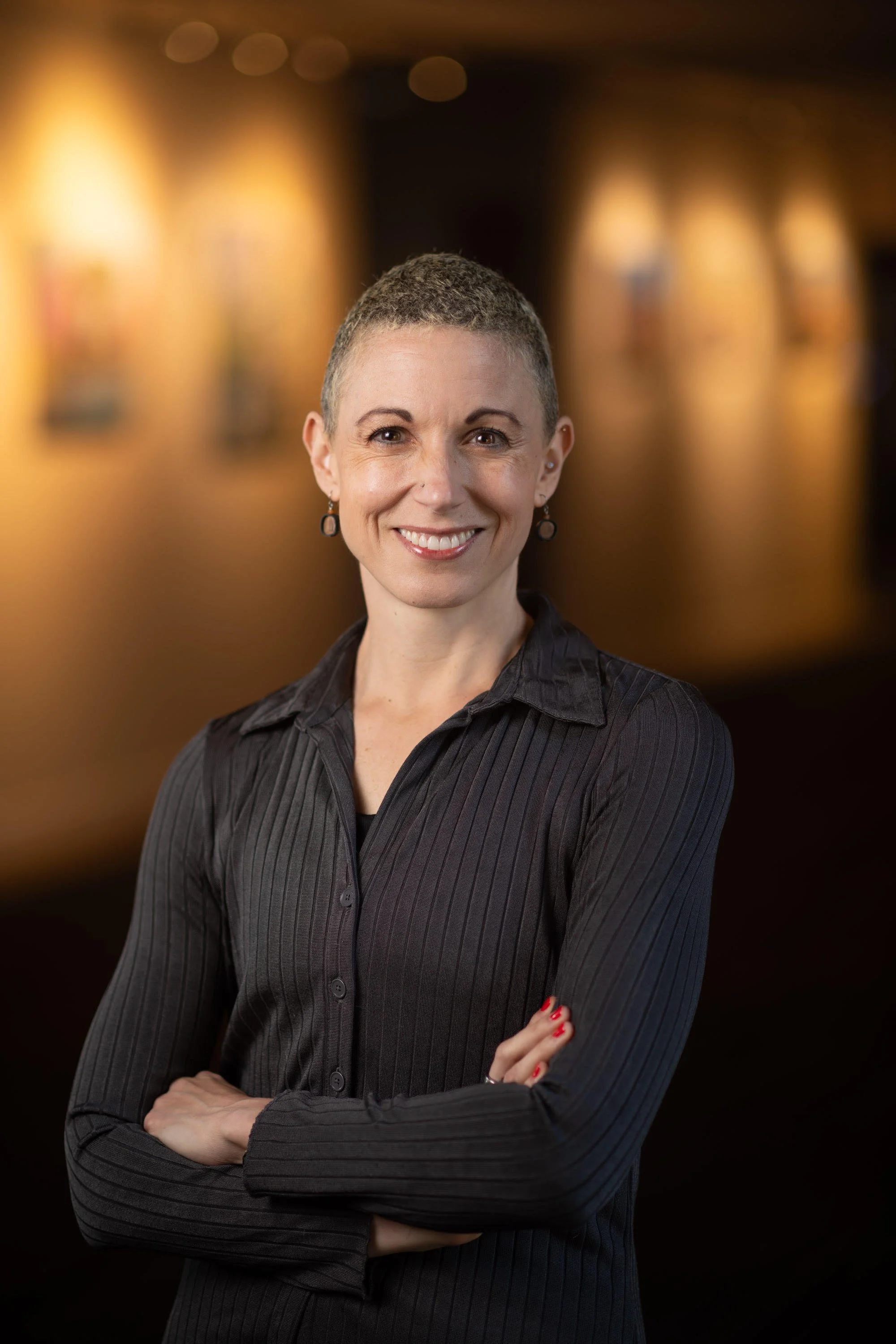
Ronnie ashline
is a writer, educator, and learning-design expert whose work spans fiction, instructional design, and the evolving landscape of artificial intelligence in education. Ronnie is the creator of The Woman Series, a multi-book thriller saga that blends psychological tension with layered, reverse-threaded storytelling. Her published novels include The Woman with Many Names and The Death of Dorian Gray, with Daisy and Gigi forthcoming. Across genres, her work reflects a commitment to complexity—of characters, of learning, and of the stories we choose to tell about power, identity, and truth. She is also the author of Integrating AI in Learning Design, a practical guide for educators and designers navigating the new era of generative technology in learning experiences. She lives in Seattle, where she divides her time between writing, teaching, unraveling historical rabbit holes, experimenting with generative AI, crocheting intricate creations, and raising a family of humans and far too many pets.