
The Other Mermaid
Sohana Manzoor
Far out in the ocean, where the water is as blue as the prettiest cornflower, and as clear as crystal, it is very, very deep; so deep, indeed, that no cable could fathom it: many church steeples, piled one upon another, would not reach from the ground beneath to the surface of the water above. There dwell the Sea-King and his subjects…
—Hans Christian Andersen, “The Little Mermaid”
In those days, my mother and I lived on the southern side of the Sea-King’s watery realm. Our part of the ocean was known as the Sargasso Sea as it was filled with seaweed and moss. Even the creatures in this area were different from the rest of the ocean. I grew up playing with turtles and eels that preferred to live among the algae. My mother and I lived in a cave along with Mila, a red squid she had saved from a shark when she was a mere baby.
My mother was a very clever mermaid, and mer-people came to consult her about their problems. Whenever they visited, they brought something for her in exchange for whatever they sought from her. Mother listened to them attentively and then concocted potions of vibrant colors. Most of them were medicines for ailments. I learned a little of her trade even though she never consciously taught me much. In fact, she often chased me away when she was experimenting with something.
“Go away, Cowrie,” she would say.
“Can I go up?” I would ask.
“Yes, yes, just go. And take Mila with you, too.”
Mila and I played among the rocks and grass when mother ran her experiments in the cave. We watched from a distance as bubbles gurgled up through the crevices of our rooftop. Sometimes things wouldn’t go as expected. One time when Mila and I were examining some large abalone shells, everything suddenly shook, and a school of fish darted past us to hide behind the corals. Remembering mother, we rushed homeward. We had to dig her out—all singed and covered with soot and dirt. Her salt-and-pepper hair was smeared with a viscous pinkish fluid. Yet her eyes shone as she showed us a jar of sparkling liquid. Apparently, it was a special potion to lessen the pain during childbirth. She had been trying to make it for a while, and it finally turned out just right.
Mila and I were not into potions—we were a wild, adventurous pair. I had learned to collect ‘treasures’ from drowned ships. Whereas other mer-people only took things lying on the sand around the ships, I would dive inside them and bring out treasures nobody had seen before. Mila helped me, using her long tenacles to reach small objects from nooks and crannies. To be honest, most of these were not really useful, but were nice as decorative items.
Mother never stopped me from going anywhere. Her only reservation was about the Sea-King’s palace. “Keep away from the King’s family,” she would say.
“Why?” I would ask.
“You ask too many questions, Cowrie. But you might as well know—I came to live in these cold seas only because of your father. In the Indian Ocean where I grew up, my sisters and I were known as wise women, but here I am considered a witch. Mer-people take my help, but they treat us like outsiders. If anything goes wrong, we’re at fault. So, don’t get into trouble.”
Perhaps because it was forbidden, I took a keen interest in the Sea-King and his brood. I would often sneak around their magnificent lodgings and watch them from a distance. The King’s castle was built among live corals. The dazzling golden dome with intricate blue designs was visible from afar, and iridescent schools of fish frisked around it. The roof was made of bivalve shells that opened and closed with the current. The King had six daughters. All of them had long hair, fair skin, and bright eyes. The King’s wife was long dead, but his mother kept her granddaughters pretty and poised so that anybody who saw them never forgot them. The princesses called out to each other as they sang and frolicked among the corals.
I was not half as fair as the princesses; I was quite brown. I reasoned that it was because I roamed about the sea and often sunbathed on the rocks. My hair was not smooth and sleek like them either, but curly, rough, and reddish. When I was younger, my playmates called me ‘Sea lion.’ They snickered and said that my mother had mated with a sea lion, and that’s how I was born. Then I had small breasts, and hence was often mistaken for a merman. I grimaced and my gaze fell on my greenish tail and the roughened-up scales from years of diving into shipwrecks. Well, it couldn’t be helped; I was not willing to abandon my adventures and the money I made through my discoveries.
I clearly remember the day I first met the little princess. I was in my usual spot in the sea-marketplace, busy selling the trinkets I had collected from a recently drowned ship. That’s when a pretty mermaid with a blue tail glided into my stall. Her raven hair was tied with sand dollars and a string of pearls adorned her tail. She had come to ask about the alabaster statue in front of my stall. It was a human male. Her fair hands caressed the creature’s limbs, especially the two long things it had instead of a tail. A look of wonder came into her eyes, and she whispered, “How much will you charge for this one?” She had a voice like a flute.
I was taken aback because I thought the statue was ugly. As I gaped at her, I suddenly recognized her. I felt tongue-tied and didn’t know what to say. She called out to someone, and another mermaid appeared. She handed over a fat purse to me and the first mermaid said, “There are fifty shells in it. Will that do?”
My eyes widened. She was willing to pay that much? I felt tempted, but then I thought about Mother and shook my head.
“You want more. I can get more if you wait a little…”
I shook my head again but could not speak.
“You won’t sell it?” She sounded as if she was on the verge of tears.
“No, no, I didn’t mean that,” I finally managed. “The statue is damaged, so I can’t charge so much. Twenty shells will do.”
“Really?” she whispered, and her big eyes grew bigger. They were so blue and deep, I almost drowned in them.
“That thing is quite heavy though. I can help you carry it to your place,” I said, not ready to let her go.
She smiled. “That’s all right. My maid will carry it.” But as it turned out, the statue was too heavy for her maid to carry by herself. So, the two of us ended up taking it to the little princess’s garden. Oh yes, all the princesses had their own gardens. I gave her a few other trinkets for free because I wanted to befriend her. She certainly was a nice girl, very unlike the fishwives I was used to haggling with.
“You have only red flowers here,” I observed. “Why don’t you plant a weeping willow near the statue? It will look nice.”
“A weeping willow? What’s that?”
“Oh, weeping willows are beautiful trees with hanging leaves and branches. We have plenty of those on our side of the sea. You want one?”
Her eyes lit up and she smiled. “I love the round red flowers because they remind me of the sun,” she said. “But I think a weeping willow would be lovely.”
“I’ll get one for you,” I promised.
That’s how it began. Among all the daughters of the Sea-King, her garden was the simplest. Shy and quiet, she spent much of her time in her garden. I brought a small branch of a rose-colored weeping willow for her and helped plant it near the statue. It grew in no time, hanging its branches and leaves around the figure. I also got round moonstones for the little princess, and she decorated her garden with them. At night, one could see the shining stones from a distance. Soon enough, the little princess Pearl and I became good friends.
However, her sisters and grandmother were weary of me as I was the sea-witch’s daughter. But the Sea-King apparently put in a good word for me when he had heard how modest I was about the price of the statue and how helpful I had been. He said that as a daughter of the Sea-King, Pearl should be gracious to all his subjects. I didn’t quite understand all that was said. But I was surely happy to be her playmate.
Only Mother snorted and shook her head. “You’re in for trouble. Don’t come back to me crying that I didn’t tell you to keep away from them.”
There was nothing at all to warn me that anything could go wrong. The only thing that bothered me about the little princess was that she was overly interested in the world of humans. When I told her that I had been above the sea and seen humans, she was over the moon.
“Can you tell me about them, Cowrie?” she implored. “How did you go there? We’re not supposed to swim to the surface until we’re sixteen years old.”
I stared at her. Now who made that rule? I had been going to the surface since I was seven or eight. Then I remembered that Mother once said that the high-born families of the sea didn’t allow their children to go to the upper world until they were sixteen.
So, the four elder princesses had been there, but the younger two were yet to go. The little princess would have to wait two more years. Her grandmother often told her stories about humans, but she also had not been above the sea in many years. I told her all that I knew. I told her about the infinite sky, the floating clouds, and the flying birds; about the sun, the moon, and the stars. I told her all that I knew of humans. I didn’t have any reason to like them, though. They were a rowdy lot, and killed more fish than they could eat. But they had interesting things in their ships, which I liked to collect from shipwrecks.
“My grandmother says that they have something we don’t,” Pearl confided in me on her fifteenth birthday.
“You mean their legs?” I asked. “What’s so special about those dangling supports?”
“No, humans have souls, but we don’t.”
“Soul? What’s a soul?”
Pearl was patient with my ignorant self. “You see, we live for three hundred years, but humans die early. Most don’t even get to be a hundred. But they have souls that persist even after death.”
“What?” I laughed because I had seen them throw their dead bodies into the sea. Then fish peck at them until they turn into white skeletons.
“My grandmother says that human souls are light and invisible. But after death they go to a place called heaven. It’s a wonderful place where everybody’s happy. We live a long life, but we have no souls. We just turn into the foam of the waves.”
That was the first time I heard about the soul thing. I went home and asked my mother. She looked exasperated and cursed under her breath. “I told you not to mingle with those good-for-nothing princesses,” she spat.
“But what is a soul? And why don’t we have it?” I cried.
Mother shrugged and said, “Well, we don’t have legs and humans don’t have tails. We get to live for three hundred years or more, but they don’t.” She paused and said, “And what makes you think that having a soul is so great? I can turn you into a human if you want.”
I gaped at her. “You can do what?”
Mother waved her hands. “It’s not that hard. But there’s a price for it. Tell me, though: do you really want to be a human?”
I thought for a while and then shook my head. No, I didn’t. That was perhaps what Pearl would want.
I shared many other stories with Pearl, and she ardently waited for her sixteenth birthday. She was sure that something momentous would happen. On the day before the auspicious occasion, I bade her good luck and goodbye. For some reason, I felt depressed. Instead of diving into the wrecked ships, I went home and fell asleep. In my dreams, I saw Pearl braving a storm and swimming toward a ship.
When I woke up, an entire night and day had passed. I remembered my dream and wondered what adventures the little princess was having. Signaling Mila to follow me, I sped toward the King’s palace. I learnt from Pearl’s maid that she had returned home but was silent and morose. Maybe the adventure had not been what she expected. Well, at least she was back safely.
Two days later, our cave had visitors. Pearl had bribed her maid to find me, and when I came out of my hole of a room, I saw the two of them sipping my mother’s sea cactus drink. Laughter bubbled up inside me as I watched Mother handing out her special molasses cookies. I could tell she was charmed by the Sea-King’s daughter.
I accompanied Pearl on her way back. After a while, she turned to me and said, “Your mom is such a wonderful mer-woman! Why didn’t you ever ask me to visit your home, Cowrie?”
I was totally dumbfounded. Who was I to invite a princess to our hovel of a place?
We swam in silence after Pearl sent off her maid to run some errands. At length, she said, “Your mom is a witch, right? Can she change mer-people?”
“What do you mean by ‘change mer-people’?” I mumbled.
She was silent. Then she said, “Can she make me a human?”
I gasped.
Pearl said, “What would I not give to have a human soul!” She paused and whispered, “My maid told me your mom can do magic. She can change mer-people. Will she change me?”
I was bad at lying, so I kept quiet. We did not speak the rest of the way.
<>
A few days later, when I came back from a new expedition, I found my mother waiting for me at the window. She was furious to say the least.
“Who told the little princess that I could make her human?” she asked.
I certainly did not. I learned that the princess had paid my mom a visit earlier that day asking her to turn her into a human girl. My mother flatly refused, but the princess was adamant. She left in tears.
I went to look for Pearl and finally found her sitting in her garden, hugging the human statue and weeping.
I tried to talk to her. But all I could make out was that she had fallen in love with a human boy on her first night above the sea. She had saved his life when a violent storm caused his ship to sink. And she was willing to forsake her family and friends for this unknown creature.
I sat flabbergasted.
I thought of approaching the Sea-King’s mother to talk sense into the little princess. But I realized that the high-born lady wouldn’t understand—on the contrary, she would think my mother and I must have put these ideas in her head.
“Turn her into a human then,” I said to Mother. “Maybe then she’ll see they’re not as great as she thought,” I cried. Why was I so angry? “Surely you can turn her back into a mermaid later!”
Mother gave me a strange look. “Everything has its price. These are serious matters—changing one life into another. The potion is strong and might affect her badly.” She was silent for some time and then said, “But if she’s doing it for love, I can’t say no. After all, I also ran away for love.”
She did? I never knew that.
“She almost makes me wish I was a human myself!” I blurted out. Mother looked at me sadly and shook her head. “Potions can’t change hearts,” she said.
Nevertheless, she prepared a potion that could transform a mermaid into a human girl. It was so strong that I sneezed at the pungent odor even from ten feet away. Mother told Pearl to go to the surface of the sea and find the shore. She could have her drink there. She also warned her of drastic side effects. The princess agreed regardless.
“If the object of your interest does not recognize you and marries someone else, you will turn into the foam of the waves the very next day,” Mother said solemnly. “Are you prepared for that? I doubt there will be an immortal soul.”
The lovelorn mermaid didn’t think twice. She sped to the upper part of the sea, and I gazed after her. Why did my heart ache so much?
In the days after she left, the sea appeared colorless and cold to me. I had little interest in diving the shipwrecks. Mila sulked around, but I was too miserable to notice her.
A week later, finally I went up to see how Pearl was doing. I found her sitting by the sea on a boulder in a long flowing dress. The sea-green silk rustled in the wind, and she had turned into the loveliest human creature I had ever seen. But her beautiful voice was gone—the potion had made her mute. I could also see that her feet hurt badly when she walked. She was very delicate, after all.
Day after day, the little princess suffered in silence in the palace of the prince who called her his ‘darling foundling.’ I saw him a couple of times. I suppose he was good-looking, but his eyes certainly did not reflect the deep adoration with which Pearl looked at him. She would come down from the palace in the evenings and sit on the steps that descended into the waters of the sea. Putting her burning feet in the water, she would weep for the world she had left behind. I would be there, too, with salves from my mother’s closet that would provide temporary comfort for her swollen feet. Even though I was angry with her at first, I also cried when I saw her suffering.
Then one day, I learnt that the prince would be marrying a princess from another country. Obviously, he had not recognized his true savior and her love for him. How could he, who had never sacrificed anything in life?
Meanwhile, our days under the sea were not going well. The Sea-King was furious with my mother and me when he learned how his precious little princess had become a human. He ordered Mother to turn her back into the mermaid she used to be.
Mother, Mila, and I sat at the kitchen table morosely. “We could run away, you know,” said my mother eventually. “My sisters still live in the Indian Ocean. It’s a long way, but we could try.”
“But the little princess—what will happen to her?” I cried.
“She has lost her love. She will turn into sea foam soon after her lover gets married to the other girl,” Mother replied sadly.
I recalled our first meeting and all the time Pearl and I spent together. I remembered her crying by the prince’s castle. I couldn’t bear the thought that she would turn into foam after giving up so much.
Wasn’t there any way to get her back? Mother nodded slowly. But turning something back into its original form required a sacrifice. Where would we get that? Either the prince had to be killed, or some merman or mermaid be willing to turn into a human.
That evening, I went to find Pearl again. She was not on the steps. Finally, I found her sitting on the large boulder by the sea. As I surfaced from the waters, she turned her face toward me. She smiled wanly and her speaking eyes seemed to ask how I was.
I said, “You must come back to the sea, Pearl. My mother will turn you back into a mermaid.”
Her eyes widened.
“There’s a catch, though. Can you kill that stupid prince of yours? A life for a life, as mother says.”
She gasped and shook her head vehemently.
“Why do you care for him so much?” I cried angrily.
She started weeping.
“All right, all right, don’t cry now.” I couldn’t bear to see her in tears.
Cursing under my breath, I went back to ask my mother for something I knew she wouldn’t agree to. But I was adamant, and Mother finally had to give in.
Before sunrise the next morning, I took the two bottles of potion Mother had given me and went to find Pearl. I knew that the prince’s wedding celebrations were happening on a ship. These humans were totally useless. They could barely swim and yet they would have parties on ships. After a night of frivolity, they had all gone to sleep. Only Pearl stood alone on the deck of the ship. I threw one bottle up to her and made a sign telling her to drink its contents. While I hoped that she would get her voice back, I didn’t dare to think what my potion would do to me. But I was a sturdy mermaid, and surely, I could withstand the pain.
“Jump, Pearl!” I yelled at her. And she did that just as the first rays of the sun hit the waves. I saw her sisters rising from the sea. They had come to take their little sister home. For many years, I would not know that my princess also followed her heart. She might have lost her love, but not the immortal human soul. Assuming that she was safe I swallowed the potion in my own bottle and swam furiously towards the shore. I remembered the shipwrecks and the statue of the human boy and that day at the sea-market. Maybe Mother was right, and we should have escaped to the Indian Ocean. I struggled towards the shore, but something was cleaving my tail into two. How did Pearl bear the searing pain? The Sea-King’s palace rose up before me, and then I lost consciousness.
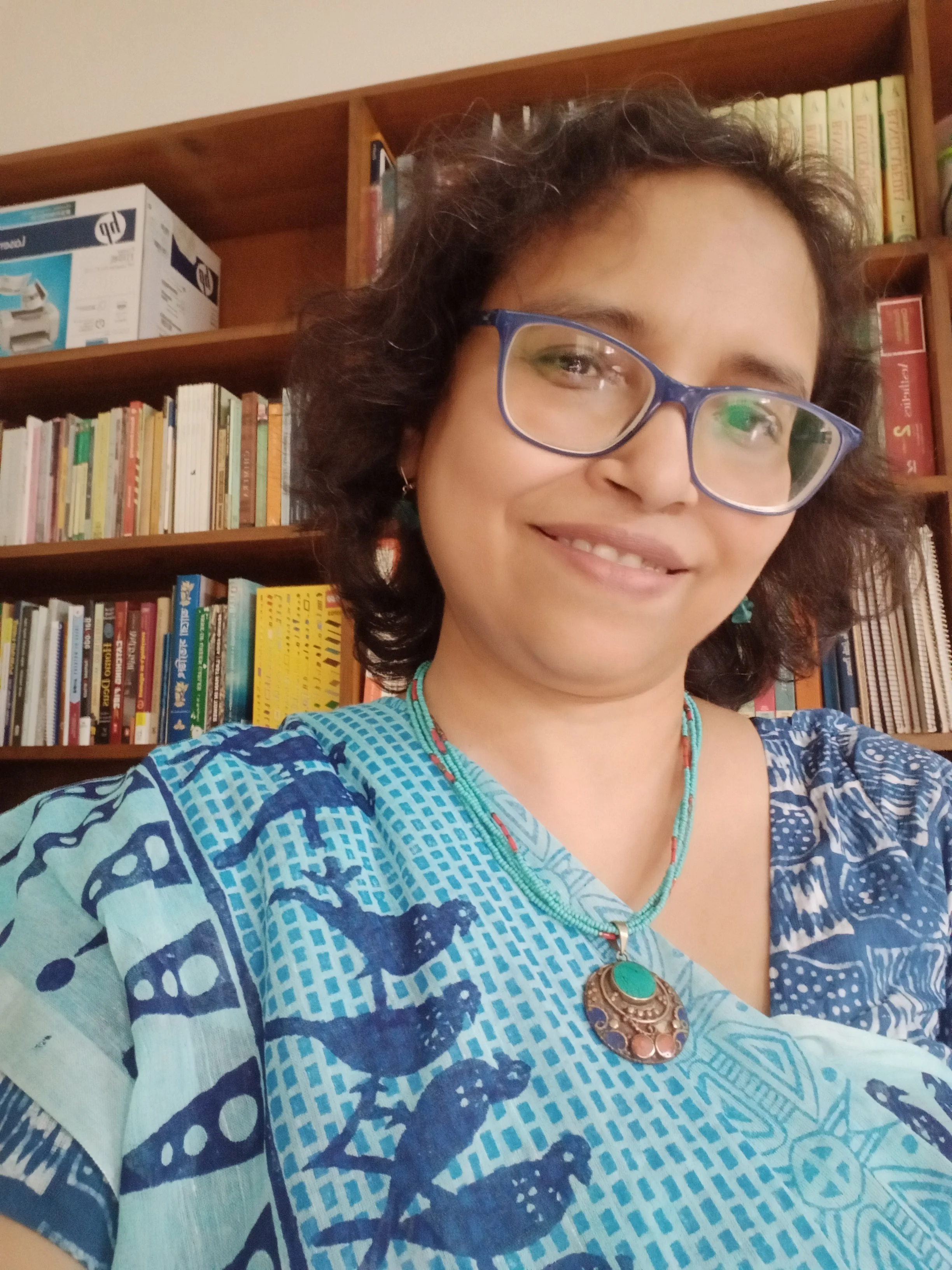
Sohana Manzoor
is a fiction writer from Bangladesh, with a PhD in English. She is the editor of Our Many Longings: Contemporary Short Fiction from Bangladesh (2021). Her work has appeared or is forthcoming in Southword, Bellingham Review, Valparaiso Fiction Review, Litro, Eclectica, Best Asian Short Stories, and elsewhere. Currently, she is pursuing an MFA at the University of British Columbia, Vancouver.